
 Login
Login
 Stores
 Cart
Cart
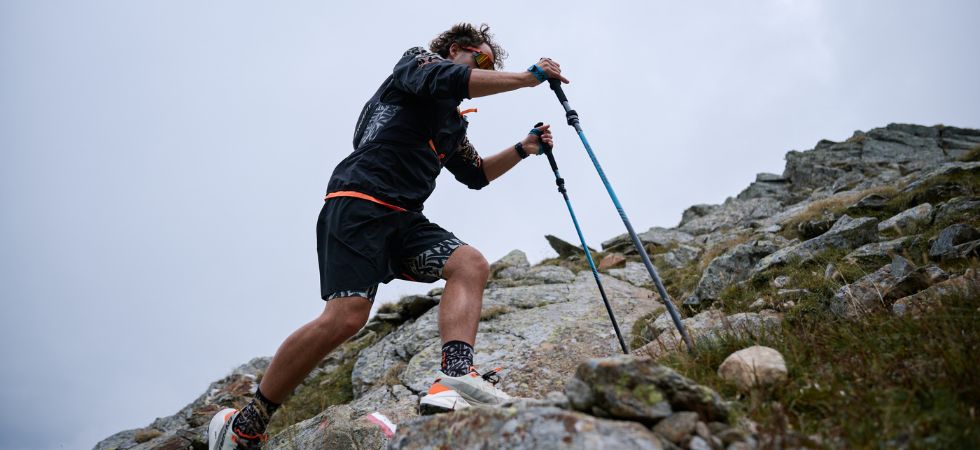
As soon as the ground becomes uneven, the climbs get steeper and descents require more technical focus, your running technique changes too. Instead of holding a steady pace on asphalt, trail running is all about adapting your rhythm to the terrain, the surface and how you feel on the day.
For trail running beginners, this can feel unfamiliar at first. Sometimes you run, sometimes you hike efficiently, and sometimes sure footed movement matters more than speed. Once you understand the basics of trail running technique, you move with more control, save energy and feel much more confident on changing terrain. That is why it is worth practising your technique consciously in training, not just on race day.
In this article, trail running athlete Christian Pacher shares five tips to help you improve your running technique off road. We also explain how poles, shoes and the right equipment can support your technique on the trail.
Trail Running Technique Explained by an Expert
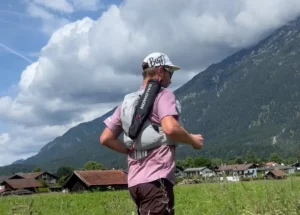
Christian is our guide for the Sport Conrad Pub Run community event in Garmisch Partenkirchen and brings plenty of trail running experience with him. This year, he will be lining up at the Zugspitz Ultratrail for the third time. On top of that, he has completed numerous other races and countless training kilometres in the mountains. That is exactly where he feels most at home: on trails, between climbs, descents and that true mountain running feeling.
Drawing on his experience on the local trails around Garmisch Partenkirchen, Christian has put together five trail running technique tips for beginners. They will help you move more safely, more efficiently and with more enjoyment on the trails.
1. Uphill Running Technique
- Tip: Take short steps, keep a steady rhythm and do not push too hard too early.
- On steep sections, it is often better to power hike efficiently than to force yourself to keep running.
2. Downhill Running Technique
- Tip: Stay relaxed, avoid braking too hard and do not lean too far back.
- Keep your eyes looking ahead and use your arms for balance.
3. Technical Terrain
- Tip: Do not just look directly at your feet. Scan the trail 2 to 4 metres ahead.
- Choose your line early and move with quick, clean footwork.
4. Energy Management
- Tip: Especially on longer distances, avoid investing too much energy too soon.
- Adapt your pace and technique to the terrain, the distance and how you feel on the day.
5. Practise Your Technique in Advance
- Tip: Test your running technique, equipment and setup during training, not for the first time on race day.


Technique with Trail Running Poles
Trail running poles can make a big difference to your technique, especially on long climbs, steep sections and longer distances. Used correctly, they reduce the load on your leg muscles, add extra forward drive uphill and help you find a steady rhythm. Poles are a major advantage when power hiking because they allow you to actively include your arms, shoulders and upper body in the movement.
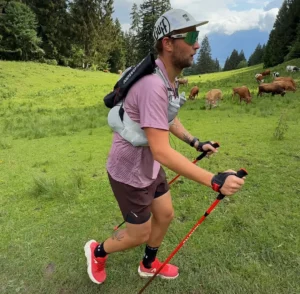
However, it is important to practise using poles properly. When using trail running poles, pay attention to the following technique:
- Use the straps. This keeps the poles stable in your hands and allows you to transfer power from your arms and upper body into your movement more effectively.
- Alternate pole plant: On moderate climbs, use the poles alternately. Your right pole works with your left leg, and your left pole works with your right leg.
- Double pole plant: On steep sections, use the double pole technique. Plant both poles at the same time in front of your body and push yourself powerfully upwards. Place the poles far enough in front of you so that the pressure helps move you forwards and upwards.


Choosing the Right Trail Running Shoes for Good Technique
A good trail running shoe can support your technique, but it cannot do the work for you. What matters most is that the shoe suits your terrain, your distance and your running style. For technical trails, you need reliable grip, stability and a precise feel for the ground. On longer distances, cushioning, comfort and protection become more important. For short, fast trails, the shoe can be lighter and more direct.
As a rough guide, lightweight and responsive models with good grip are ideal for short, fast trails. For medium distances, versatile all rounders are a great choice, combining comfort, stability and energy. For long distances, the focus should shift more towards cushioning, drop and stability. If you regularly run in wet conditions or alpine terrain, waterproof trail running shoes are worth considering.
You can read more in our article on the best trail running shoes.
The best approach is to try different models directly on your feet. In our Sport Conrad stores, we support you with a free running analysis and help you find the right trail running shoe for your running style.


Conclusion: Improve Your Trail Running Technique Step by Step
Good trail running technique comes with experience and focused practice. Short steps uphill, relaxed downhill running, looking ahead on technical terrain and smart energy management all make a real difference on the trail. If you practise these basics regularly, you will run more safely, more efficiently and with more enjoyment.
At Sport Conrad, you will find the right running equipment and running apparel for your next trail running sessions, from your first training run to race day. That way, you are well prepared when the asphalt ends and the trail begins.
Frequently Asked Questions about Trail Running Technique
How can I train downhill running?
Start with easy, runnable descents and gradually progress to steeper or more technical sections. If a descent feels too steep or unsafe at first, walk it in a controlled way instead of forcing yourself to run. When running downhill, short, quick steps, a relaxed upper body and an active gaze ahead are important. Try not to brake too hard or lean too far back. The more often you practise descents consciously, the more confident your footwork becomes and the more controlled you will feel when increasing your speed.
Do I need trail running poles as a beginner?
Not necessarily. For short and easy trails, you usually do not need trail running poles. However, it is still useful to practise using them early in training. On longer distances, routes with lots of elevation gain or very steep climbs, poles can make a big difference. They help you save energy, maintain your rhythm and reduce the load on your legs.
Do I need strength training for good trail running technique?
Yes, strength training is very useful if you want to improve your trail running technique. On trails, you need more than just endurance. You also need stability, body tension and control. A strong core helps you run smoothly and efficiently on uneven ground. Stable legs, feet and ankles help you place your feet more securely on technical terrain and stay better controlled when running downhill.
You can find more information about trail running training, including exercise recommendations, in our detailed article: Trail Running Training Plans and Tips