
 Login
Login
 Stores
 Cart
Cart
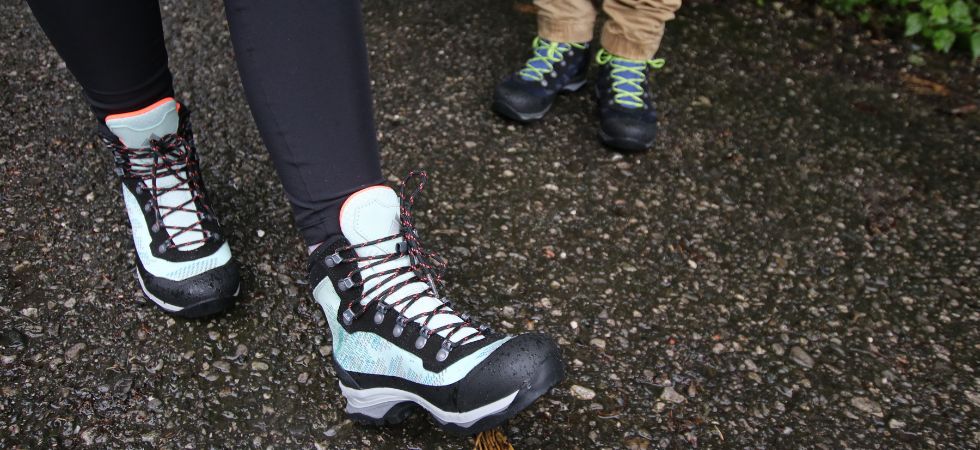
Finding the right hiking boot can feel confusing at first: stiff or flexible sole, high or low cut, grippy tread, abrasion resistant materials or even crampon compatibility. There are many features to consider, but there is a helpful system to guide you: hiking boot categories from A to D. They give you a quick overview of which boot is suited to which terrain and activity. Before choosing a model, it is worth taking a closer look at your plans and the right category for hiking and mountaineering boots.
In this article, you will find a practical overview of the different hiking and mountaineering boot categories.
Hiking and mountaineering boot categories at a glance
- 🥾 Category A and A/B: for walks, easy hikes, forest tracks, service roads and alpine pasture trails.
- ⛰️ Category B and B/C: for more demanding hikes, trekking tours and alpine terrain. Some B/C models are suitable for crampons.
- 🧗 Category C: for challenging mountain tours, glaciers and via ferratas, depending on the model with compatibility for semi automatic crampons.
- 🏔️ Category D: for high alpine tours, ice, firn and expeditions. These mountaineering boots are particularly stiff and fully crampon compatible.
- 👣 The category is not the only deciding factor: fit, terrain, tour length, backpack weight and personal experience should also match your choice of boot.
What do boot categories A to D mean?
The category system for hiking shoes and mountaineering boots was developed in the 1970s by the footwear brand Meindl, originally as a way to classify its own collection. As the system proved useful in practice, other manufacturers gradually adopted it too. However, it is not an official standard. Where exactly a model sits between two categories is ultimately decided by each manufacturer.
In general, three criteria are key: how stiff the sole is, how high and supportive the upper is built and whether crampons can be attached. At the softer end of the scale, category A boots have a flexible sole and a low cut. At the stiffer end, category D boots feature a very rigid sole and a high, supportive upper for high alpine tours. In between are the transitional categories A/B and B/C. These are the categories where many hiking and trekking tours sit. At the end of this article, we will also introduce two additional types of footwear that have become increasingly popular in recent years: approach shoes and speed hiking shoes.
In our online shop, you can find the boot category clearly listed in the product details.
Of course, the category alone is not everything when buying hiking boots. Fit, backpack weight, surefootedness, weather, terrain, personal experience and individual preferences all play an important role too. You can find an market overview of the best hiking boots here.
Table: hiking Shoe and mountaineering boot categories compared
| Category | Recommended use | Sole and upper | Crampon compatibility |
|---|---|---|---|
| A | Forest trails, walks, short and flat hikes | Flexible, soft sole; low to ankle high cut | Not suitable |
| A/B | Hiking in low mountain ranges, foothills of the Alps, forest roads | Higher upper, more robust tread | Not suitable |
| B | Demanding hikes, easy mountain tours, Alpine crossings with luggage | Supportive upper, stiffer sole | Not suitable |
| B/C | Demanding trekking, multi day tours into high alpine terrain | Stiff sole and supportive upper | Limited crampon compatibility, depending on the model usually suitable for strap on crampons or lightweight crampons |
| C | High mountains, glaciers, via ferrata | Very stiff sole with high torsional rigidity | Limited to full crampon compatibility, depending on the boot suitable for semi automatic crampons |
| D | High alpine terrain, ice and firn tours, expeditions | Extremely stiff sole, high and very supportive upper | Fully crampon compatible, suitable for automatic crampons |
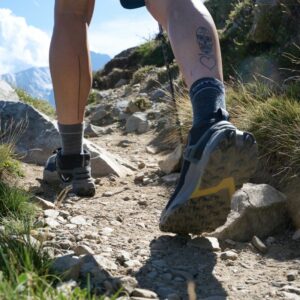
Category A hiking boots: leisure use and easy trails
Category A is the lightweight class among hiking boots. The sole is flexible, fairly soft and perfectly sufficient for well maintained forest and meadow trails. On scree, steep paths or uneven ground, however, it quickly reaches its limits. The upper is usually made from textile materials or thin leather, with a low to ankle high cut. For a Sunday walk in the woods, easy walking paths or a flat route in the Alpine foothills, you usually do not need more than this.


Category A/B hiking boots: hiking in low mountain ranges
One category up, the boot already feels noticeably more stable. A/B boots usually have a higher upper, more lateral support and a grippier tread than pure leisure or multifunction shoes. This makes them a good choice for hikes in low mountain ranges, the Alpine foothills and on forest roads or alpine pasture trails. Your ankle gets more support, without the boot feeling heavy or sluggish.


Category B hiking boots: demanding hikes and easy Alpine crossings
This is where things become more alpine. Rocky paths, rough trails and easy alpine routes are typical terrain for this category. The upper and sole are noticeably more supportive, often combined with a protective rubber rand that helps guard against rock contact and abrasion. For demanding hikes in low mountain ranges, easy high mountain tours or a classic Alpine crossing with up to ten kilograms of luggage, this category is the right choice.
Are you just getting into hiking? Then take a look at our hiking for beginners article.


Category B/C hiking boots: trekking and easy high mountain tours
B/C boots usually offer limited crampon compatibility. Depending on the model, they can be combined with strap on crampons or lightweight crampons, making them suitable for simple firn fields or easy glacier passages. They are not designed for steep ice, demanding high alpine tours or extended rock contact while wearing crampons. B/C boots are the right choice for demanding trekking and multi day tours in varied terrain, such as a challenging Alpine crossing with plenty of scree, rough trails or occasional snow passages.


Category C mountaineering boots: high mountains, glaciers and via ferrata
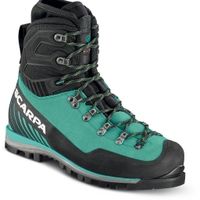
From category C onwards, a hiking boot becomes a true mountaineering boot: stiffer, more precise and built for significantly more alpine terrain. The sole is firm and torsionally rigid enough for precise edging on rock and securely takes semi automatic crampons with a heel lever and front basket system. In most cases, category C boots also feature a precise lacing system that holds the foot reliably in place. These boots show their strengths on demanding mountain tours, in high alpine terrain, on glaciers and on technical via ferratas. For easy via ferratas, lighter approach shoes or B/C boots may be the better choice depending on the approach, descent, weather and your personal experience.


Category D mountaineering boots: high alpine terrain and expeditions
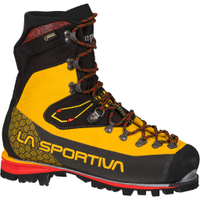
Category D mountaineering boots sit at the top end of the scale in every sense: an extremely stiff sole, a high and highly supportive upper, plus compatibility with automatic crampons for secure footing on bare ice. These boots are made for high alpine terrain, ice and firn tours, and expeditions at altitudes where every misstep can have serious consequences. This strength is also their downside. On a normal hike, a category D boot quickly feels too stiff and restrictive. Only choose category D mountaineering boots if you are actually planning tours where fully crampon compatible footwear is required, such as demanding high alpine routes, ice and mixed terrain, ice climbing or expeditions.


Approach shoes: the additional category between hiking and climbing
Alongside categories A to D, another type of footwear has become established that does not quite fit into the classic letter system: the approach shoe. It combines a precise, grippy sole with a climbing friendly toe zone and durable upper material. It performs best on rock, scree and technical approaches. On muddy forest trails or long hiking sections, however, a classic hiking boot is often more comfortable. Thanks to its lightweight upper made from synthetic materials or leather, an approach shoe is the ideal companion for the way to the crag, for via ferratas and for easy climbing sections along the route.
Even experts do not always agree on where approach shoes belong within the hiking and mountaineering boot category system. Some see them as light, versatile category A style models, while others consider them a low cut, stiffer option closer to category C. This lack of agreement highlights what really matters: an approach shoe is mainly defined by its intended use, not by sole stiffness alone. That is why it cannot be assigned clearly to one single category.
📌 In the Sport Conrad online shop, you will find a dedicated category for them: approach shoes.
Speed hiking shoes: the additional category between trail running and hiking
In addition to approach shoes, another footwear category has become established that also does not fit neatly into the classic letter system: speed hiking shoes. They are designed for fast mountain tours that combine a sporty pace, endurance and classic mountain hiking.
Speed hiking shoes are lighter and more flexible than traditional hiking boots, while also being more robust and more capable on mountain terrain than many pure trail running shoes. This gives you good support on uneven ground without the shoe feeling heavy or sluggish. They are a great option if you want to move quickly in mountainous terrain but do not need a trail running shoe.
📌 You can find speed hiking shoes at Sport Conrad.
Conclusion: how to find the right hiking or mountaineering boot
The hiking boot categories from A to D help you get a basic sense of how stiff, supportive and alpine your next boot should be. In the end, what matters most is that the boot suits your foot, your intended use and your tour objectives. Fit, toe room and heel hold are just as important as sole stiffness, upper height and weight.

Tips for choosing the right mountaineering boot category
Choose your hiking or mountaineering boot category based on the terrain you usually move in, your pace and the weight of your backpack. If you already have suitable hiking socks, factor them in when choosing your size. The key point is this: your heel should sit securely, while your toes need enough space at the front when walking downhill. If you want to use crampons, compatibility must always be checked specifically for the boot and crampon combination.
Our team in Garmisch Partenkirchen, Penzberg and Wielenbach will be happy to advise you in person and help you find the right model for your tours.