
 Login
Login
 Stores
 Cart
Cart
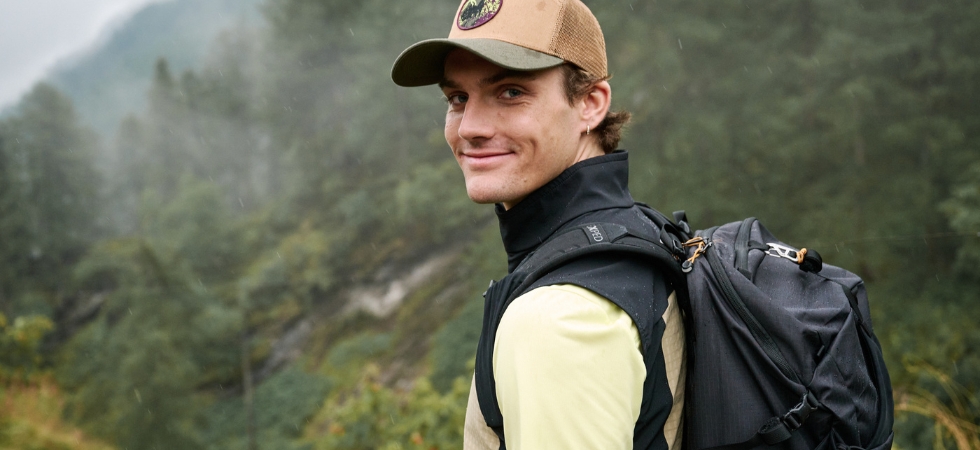
The best hiking backpack is not automatically the biggest, lightest or most expensive one. A quick after work hike, a full alpine day tour and a multi day hut trip all place very different demands on volume, carrying system, features and weight.
That is why our team of mountain enthusiasts looks beyond litre numbers and product details in this hiking backpack comparison. We focus on how a pack performs out on the trail. How does it sit when fully loaded? Does the back panel stay comfortable and well ventilated? Can you easily reach your rain jacket, water bottle, poles and snacks? And does the carrying system actually match your body shape?
In this article, we give you an up to date overview of the best hiking backpacks for 2026.
Our top hiking backpack picks for women and men
- Lightweight hiking backpacks, 15 to 25 litres: Ortovox Traverse 20, Deuter Guide Lite 24, Dynafit Traverse 16 and Osprey Hikelite Tour 24
- Classic hiking backpacks, 25 to 35 litres: Ortovox Traverse 30, Deuter Futura Pro 32, Osprey Talon 33 and Vaude Jura 32
- Large hiking backpacks, from 35 litres: Ortovox Traverse 40, Deuter Aircontact Core and Vaude Asymmetric 42+8
- Hiking backpacks for kids: Vaude Puck 10, Vaude Hidalgo 24+4, Kohla Happy Alpine 14L and Patagonia Refugito Day Pack 12 L
The best hiking backpacks by size
Choosing the right backpack size is key to comfort, functionality and overall enjoyment on the mountain. Depending on tour length, terrain and the gear you carry, your backpack needs can vary a lot. The following categories will help you find the right hiking backpack for your plans.
Lightweight hiking backpacks
Lightweight hiking backpacks with around 15 to 25 litres of volume are ideal for short day hikes, fast mountain walks, hut approaches with minimal gear and summer tours where you only carry the essentials. These packs offer enough space for a rain jacket, fleece, hydration bladder or bottle, snacks, a first aid kit, sunglasses and a thin spare layer.
For shorter day hikes, the balance between low weight, comfort and easy access matters most. If you are out for two to four hours, you do not need a fully equipped trekking pack. A well ventilated back panel, comfortable shoulder straps, quick access to water and snacks and a reliable chest strap are much more important.
Lightweight hiking backpacks are especially useful for:
- short hikes in low mountain ranges
- summer mountain tours with minimal extra clothing
- quick after work hikes
- travel and day trips
- minimalist tours with a stable weather forecast
What to look for when choosing a lightweight hiking backpack:
- low weight without an unstable fit
- close fitting or well ventilated back system
- chest strap, ideally with an emergency whistle
- hip belt or hip fins for better stability
- side stretch pockets for water bottles
- attachment points for trekking poles
- valuables pocket and key clip
- hydration system compatibility
- rain cover or water repellent material
Our team recommends the following lightweight hiking backpacks: Ortovox Traverse 20, Deuter Guide Lite 24, Dynafit Traverse 16 and Osprey Hikelite Tour 24.


Classic hiking backpacks
Classic hiking backpacks with around 25 to 35 litres of volume are the true all rounders and among the most popular packs in this comparison. They offer enough space for longer day hikes, alpine routes and changeable weather, while still staying compact enough for active, comfortable movement. In this size range, you can fit your standard hiking kit plus a warmer jacket, spare shirt, more food, a camera or light safety equipment. For most day hikes, this volume range is the sweet spot. It gives you enough room without feeling oversized. At the same time, the carrying systems and features are usually more comfortable and more versatile than on smaller packs.
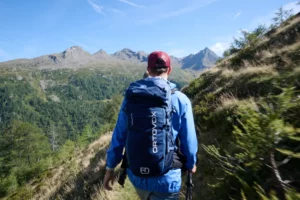
Typical uses include:
- longer day hikes in the Alps
- hikes in changeable weather
- tours with an extra insulation layer
- via ferrata routes with helmet attachment
- hikes with a camera or binoculars
- hut approaches with minimal overnight gear
Useful features on classic hiking backpacks:
- comfortable back system with ventilation
- padded shoulder straps
- stable hip belt with pockets
- front access or wide main compartment opening
- lid pocket or well organised front pocket
- trekking pole attachment
- helmet holder or attachment points
- side compression straps
- hydration system compartment
- integrated or included rain cover
Our team recommends the following classic hiking backpacks: Ortovox Traverse 30, Deuter Futura Pro 32, Osprey Talon 33 and Vaude Jura 32.


Large hiking backpacks
Large hiking backpacks from around 35 litres are designed for tours where you carry more gear, more weight and spend longer hours with the pack on your back. They are suitable for hut tours, multi day hikes, trekking routes, long approaches and alpine objectives with extra equipment.
In this category, the carrying system is what matters most. A larger pack may be slightly heavier on paper, but it can feel much more comfortable if the back length, hip belt, frame and load control are well designed. On the other hand, an ultralight pack is not much help if it becomes uncomfortable with eight to twelve kilograms of load.
For hut tours, a volume between 35 and 45 litres is often enough if you pack carefully and do not need to carry a sleeping bag. For trekking routes with tent, stove, sleeping mat and sleeping bag, larger volumes can make sense. The key is not only that everything fits, but also that the backpack keeps the load stable and close to your body.
Large hiking backpacks are suitable for:
- multi day hut tours
- long distance hiking trails
- alpine multi day routes
- trekking with extra gear
- long tours in changeable weather
- travel with an outdoor focus
Important features and characteristics:
- adjustable back length
- stable frame or load transfer system
- supportive hip belt
- load control straps
- separate bottom compartment or front access
- compression straps
- lid pocket with expandable volume
- attachment options for poles, sleeping mat or extra gear
- durable materials in high wear areas
- good ventilation despite higher load capacity
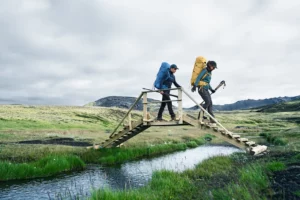
A large hiking backpack should never be chosen purely for maximum volume. Too much space often leads to overpacking. The better choice is a pack that fits the tour you actually have planned and can be compressed when needed.
Our team recommends the following large hiking backpacks: Ortovox Traverse 40, Deuter Aircontact Core and Vaude Asymmetric 42+8.


The best hiking backpacks for kids
A children’s hiking backpack should be light, comfortable and only carry as much as the child can realistically manage for the full tour.
For short outings, a small pack with room for a water bottle, snacks and a rain jacket is usually enough. Older children or longer family hikes may call for a little more volume, as long as the pack does not become too heavy. Keeping the hike fun is far more important than carrying as much gear as possible.
As a rough guide for day hikes:
- small children from around 3 to 6 years: approx. 5 to 10 litres
- school age children from around 6 to 10 years: approx. 10 to 15 litres
- older children from around 10 to 14 years: approx. 15 to 20 litres
- teenagers from around 14 years: approx. 20 to 30 litres, depending on height and build, smaller adult models may also work
The right volume depends not only on age, but also on height, back length and the planned tour. When it comes to weight, body weight is the better guideline. For day hikes, the fully packed backpack including its own weight should ideally not exceed around 10 percent of the child’s body weight. For older, well trained children, up to 15 percent may be acceptable on shorter tours. Younger children should mainly carry light items such as a water bottle, snack or thin jacket.
Important features and characteristics:
- child friendly back length
- soft shoulder straps that are not too wide
- adjustable chest strap
- very low pack weight
- buckles that are easy to use
- durable materials
- side pockets for water bottles
- internal name label
- reflective details
- simple compartments rather than complex organisation
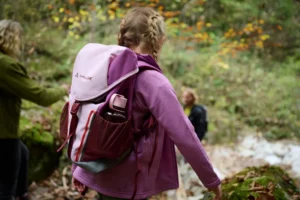
What parents should pay attention to
Children are often proud to carry their own gear. Even so, the backpack should never become too heavy. A rain jacket, water bottle and snack are usually enough. Heavy equipment, large amounts of water and extra clothing are better carried by adults.
Fit should also be checked regularly. Children grow quickly, and a backpack that fitted well last summer may already be too short, too tight or poorly balanced one year later. Our team recommends the following hiking backpacks for kids: Vaude Puck 10, Vaude Hidalgo 24+4, Kohla Happy Alpine 14L and Patagonia Refugito Day Pack 12 L.


Deuter hiking backpack comparison
Deuter has been one of the strongest names in hiking, trekking and alpine backpacks for many years. For this hiking backpack comparison, three series are especially relevant: Futura, Guide and Aircontact. They cover very different uses, from comfortable hiking to alpine tours and long trekking trips.
Deuter Futura
The Deuter Futura is the brand’s classic hiking line for day hikes and multi day tours, with a strong focus on comfort and ventilation. The range includes everything from lighter day packs to models for multi day hikes and long via ferrata routes. The Aircomfort Sensic mesh back system is designed to improve airflow and reduce sweating on the back.
The Futura line is available in a wide range of sizes. At Sport Conrad, you will find versatile models with volumes from 21 to 60 plus 10 litres. The Futura Pro comes in several versions between 30 and 40 litres.
What makes the Futura stand out:
- very good back ventilation
- high carrying comfort for hiking
- many sizes for day hikes and multi day tours
- SL and EL fits available depending on the model
- good organisation with pockets and attachment points
- ideal for hikers who value comfort more than minimal weight
The Futura is not an ultralight specialist. It is a comfort focused all rounder. If you move fast and pack very light, there are lighter options. If you want a reliable hiking backpack for many days on the trail, the Futura is a strong choice.


Deuter Guide
The Deuter Guide series is much more alpine than the Futura line. Deuter positions the Guide as a backpack for experienced alpinists who need a robust companion for longer mountain objectives. At Sport Conrad, it is available in several sizes from 22 to 44 plus 6 litres. The Alpine back system offers a secure fit, good load control and stability in demanding terrain. Alpine features include ice axe attachment, rope fixation, helmet net and ski attachment.
In this hiking backpack comparison, the Deuter Guide is a specialist for mountain tours, high alpine routes, climbing tours and technical approaches. It makes sense whenever terrain, equipment and stability matter more than maximum back ventilation.
The Guide family is especially relevant in three versions:
- Guide: robust and comfortable, with expandable volume for longer alpine tours
- Guide Lite: lighter and more reduced
- Guide Ultra: especially light and robust, with Dyneema® material


Deuter Aircontact
The Deuter Aircontact is the trekking line for long tours, heavy loads and plenty of gear. Deuter describes the Aircontact Core with high carrying comfort, precise load control, VariClick system, ActiveBalance shoulder straps, VariFlex system, ECL hip fins, aluminium Y frame and Air Spacer Mesh. The series is clearly built for load transfer and comfort on demanding trekking routes.
Compared with the Futura, the Aircontact is less about airy day hikes and more about carrying heavier loads. It comes into its own when you are out for several days, carrying more equipment or need a pack that stays stable with higher weight.
The most important Aircontact versions:
- Aircontact Core: comfort focused trekking backpack with strong load control
- Aircontact Lite: lighter trekking pack for hut trekking, crossings and pilgrimage routes
- Aircontact Pro: made for wilderness trekking, expeditions and travel with lots of gear
We carry the Aircontact series in sizes from 30 to 85 plus 10 litres. That makes this hiking backpack a strong choice for multi day tours, long hut to hut hikes and heavier loads.


What do the Deuter model names mean?
Deuter’s model names are useful because they quickly show fit, volume and intended use.
- The number in the product name stands for the volume in litres. With names such as 40 plus 10, the second number indicates additional expandable volume.
- SL stands for Slim Line. These models are designed with a shorter back length, narrower shoulder straps and an adapted hip fit. Deuter describes SL as a fit developed for the female anatomy.
- EL stands for Extra Long. These models are designed for taller people. Deuter gives a height guide of 1.85 to 2.00 metres and a fit that is six to nine centimetres longer than regular models.
- Pro usually indicates more features, more comfort or a more robust version within the series.
- Lite stands for a lighter, more reduced version with a focus on lower weight.
- Ultra stands for especially light, performance oriented models.
- Air Trek refers to larger models within the Futura family, designed for long hikes and long distance hiking.
- Core describes the comfort focused main line within the Aircontact range, with precise load control for trekking tours.
Ortovox hiking backpack comparison
Ortovox has deep roots in alpine mountain sports and many of its backpack lines combine features for mountaineering, climbing, high alpine tours and ski touring. For this hiking backpack comparison, the Traverse, Trad and Peak series are especially interesting because they each have a clear focus: alpine hiking, climbing and high alpine mountaineering.
Ortovox Traverse
The Ortovox Traverse is a versatile mountain backpack line for alpine tours. Ortovox describes the Traverse series as comfortable, functional and developed for demanding tours in alpine terrain. The Comfort Contact Back System uses contact pads for air circulation, wide ergonomic shoulder straps and a broad hip belt for better load distribution. It fits into the category of classic hiking backpacks and larger day packs. It is more mountain focused than a casual daypack, but not as specialised as a climbing or high alpine backpack. Current Traverse models range from 18 to 40 litres.
What makes the Traverse series stand out:
- very versatile for alpine hikes
- strong balance of comfort and function
- Comfort Contact Back System
- mountain specific features such as pole attachment, helmet net and ski fixation depending on model
- different sizes for day hikes and multi day tours
- S versions for shorter back lengths
- Pure versions with more resource conscious material choices


Ortovox Trad
The Ortovox Trad is clearly designed for climbing and alpine use. It is lighter, more reduced and closer fitting than a classic hiking backpack. Rather than being a general hiking all rounder, it is a specialist for approaches, multi pitch climbing, alpine climbing routes and tours where rope, helmet and hardware need to be attached cleanly and securely. The Ortovox Trad series includes several pack sizes between 18 and 35 litres.
The most important versions:
- Trad: light and versatile climbing backpack for alpine objectives
- Trad Zero: minimalist and very light version for alpine climbing
- Trad Dry: weather resistant version for tours where the contents need extra protection
- S: version with a shorter back length
The Trad is the right choice when hiking and climbing overlap. For pure hiking, the Traverse usually offers more comfort and better organisation. For rock, rope and alpine approaches, the Trad has the clear advantage.


Ortovox Peak
The Ortovox Peak is the high alpine line, aimed at demanding mountain tours in summer and winter. The Peak backpacks are fully equipped for mountaineering and offer high carrying comfort with strong load control. The latest models use a 360 degree Swisswool back system with wool at the contact points.
The Peak is not a classic hiking backpack. It sits higher up in the alpine category. This series becomes interesting when hiking turns into mountaineering: high alpine routes, ski tours, long alpine ascents, changeable conditions and more technical equipment.
Current Peak models range from 30 to 55 litres.
Model names in the Ortovox Peak series:
- Peak: comfortable, robust and multifunctional for high alpine and ski tours
- Peak Light: lighter and more minimalist for ambitious summit projects
- Peak S: shorter back length
- Peak Dry: weather resistant, robust backpack for high alpine tours


What do the Ortovox model names mean?
Ortovox model names also help you quickly understand the pack.
- The number stands for the volume in litres. A Traverse 30 has 30 litres, a Peak 45 has 45 litres.
- S stands for a shorter back length. This is especially relevant for smaller people or shorter torsos.
- Pure indicates a version with a stronger focus on conscious material choices.
- Dry stands for weather resistant models.
- Light stands for lighter, more reduced models with a focus on low weight and functional features.
- Zero stands for especially minimalist weight.
In practice, this means the Traverse is the versatile hiking and mountain backpack, the Trad is the specialist for climbing tours and the Peak is the technical pack for high alpine mountaineering. Pure, Dry, Light, Zero and S help you find the right version within each series.
Final thoughts on our hiking backpack review
The best hiking backpack is the one that fits your tour, your gear and your back length. For short day hikes, lightweight hiking backpacks with 15 to 25 litres of volume are usually enough. For longer hikes and changeable weather, classic models between 25 and 35 litres are ideal. If you are planning hut tours, multi day hikes or tours with more gear, a larger backpack from 35 litres upwards with a stable carrying system and good load transfer is the better choice.
You are always welcome to visit one of our stores and get personal advice from our team. You can also discover more gear for your next tour:
- Hiking boots
- Trekking poles
- Outdoor clothing
- Rain jackets and hardshell jackets
- Fleece jackets and insulated jackets
- Hydration systems
- First aid kits