
 Login
Login
 Stores
 Cart
Cart
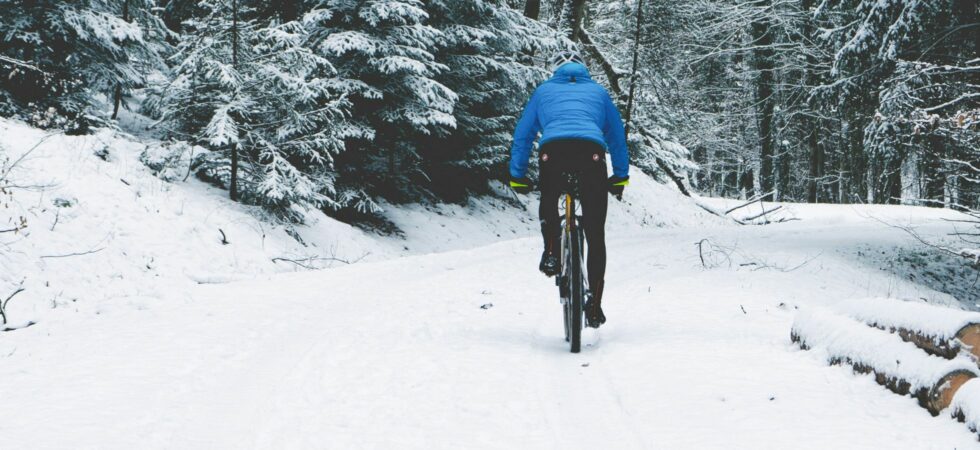
When autumn arrives and trails become damp, icy, or muddy, you have two options: your mountain bike goes into winter storage – or you keep riding. In both cases, careful maintenance is essential. Below, we show you what to consider for proper storage and winter riding.
❄️ At a Glance: How to Prepare Your MTB for Winter
- Cleaning: Clean thoroughly, especially the drivetrain, chainring, cassette, and bearings. Do not use a high-pressure washer.
- Chain & Drivetrain: Dry well and lubricate with weather-resistant oil; relieve tension on the rear derailleur.
- Bearings & Seals: Protect with a small amount of fine mechanical oil to prevent corrosion.
- Brakes: Relieve brake pads if storing; if necessary, secure brake levers. Keep brake discs clean and free of grease.
- Tires: Slightly reduce air pressure (approx. 1 bar during storage) and rotate occasionally.
- Frame Care: After cleaning, apply a protective spray and shield the frame from moisture.
- Storage: Store in a dry, frost-free place with stable temperatures; ideally horizontally when using disc brakes.
- Winter Riding: Clean regularly, use moisture-resistant chain oil (“wet lube”), and check brakes and seals more frequently.
- Tire Choice: Wider tires (around 2.4 inches) and tubeless systems improve grip and puncture protection.
- Frame & Bolt Protection: Grease metal parts, apply protective films, and maintain threaded areas.
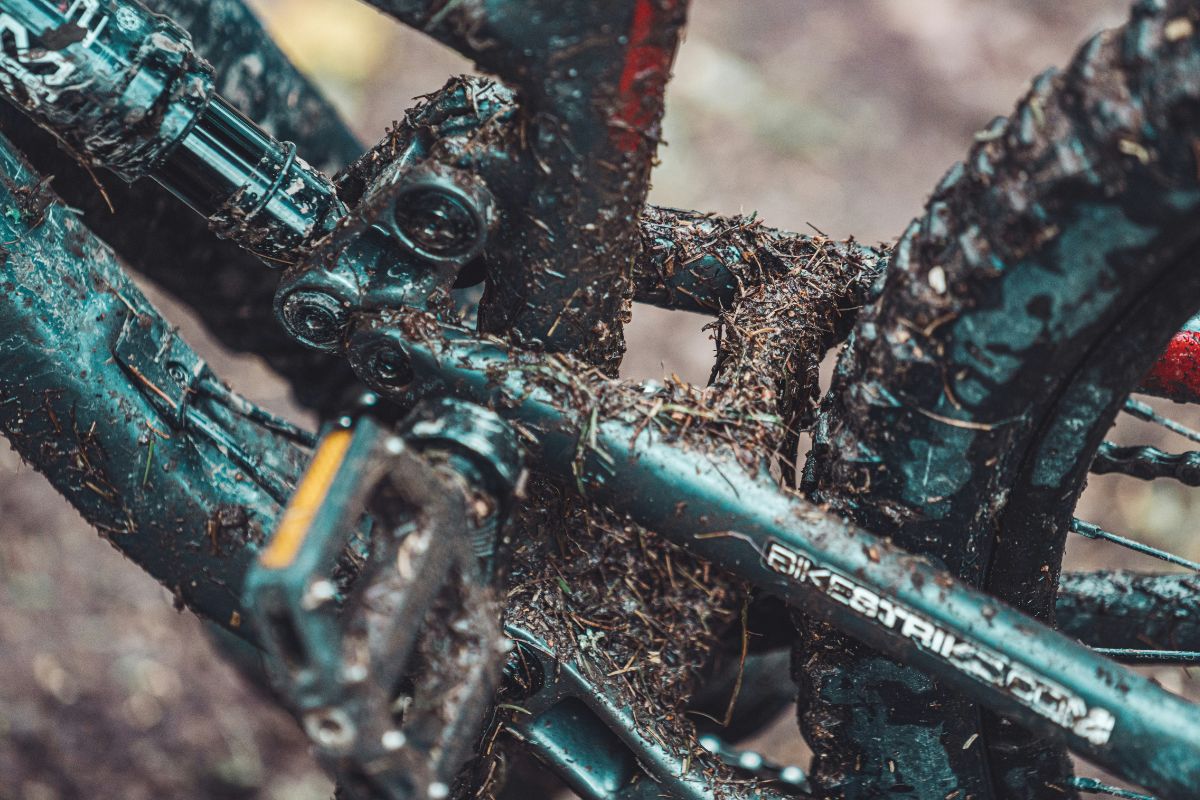
In winter, a mountain bike can quickly end up looking like this – which is why proper care is essential. Photo: Unsplash
1. STORAGE: HOW TO SAFELY GET YOUR BIKE THROUGH THE WINTER
If your MTB is going to sit unused throughout the winter, the main goal is to prevent corrosion, material fatigue, and damage caused by moisture. These are the most important steps:
Thorough Cleaning Comes First
Before applying any lubricant or protective products, your bike needs to be properly cleaned. Use lukewarm water and a bike-specific cleaner, but never a high-pressure washer – it can damage seals and bearings. When cleaning, pay special attention to the chainring, cassette, drivetrain, and the inside and outside of the wheels.
After rinsing, wipe the bike down with a dry cloth. Hard-to-reach areas can be carefully dried using low-pressure air (for example, with a floor pump) as needed.
Next: Caring for Individual Bike Components
Use the following checklist to protect key parts of your bike:
Chain, Drivetrain & Gearing
- After cleaning, dry the chain thoroughly and lubricate it with a chain oil that is not too thin. Wipe off excess lubricant.
- Derailleur tension: Shift to the smallest cog front and rear so that the derailleur and its springs are not under constant tension during storage.
Bearings & Seals
-
On exposed components such as the headset, bottom bracket, or hubs, apply a small drop of suitable fine mechanical oil to the seals or contact points. This helps protect the material and prevents corrosion.
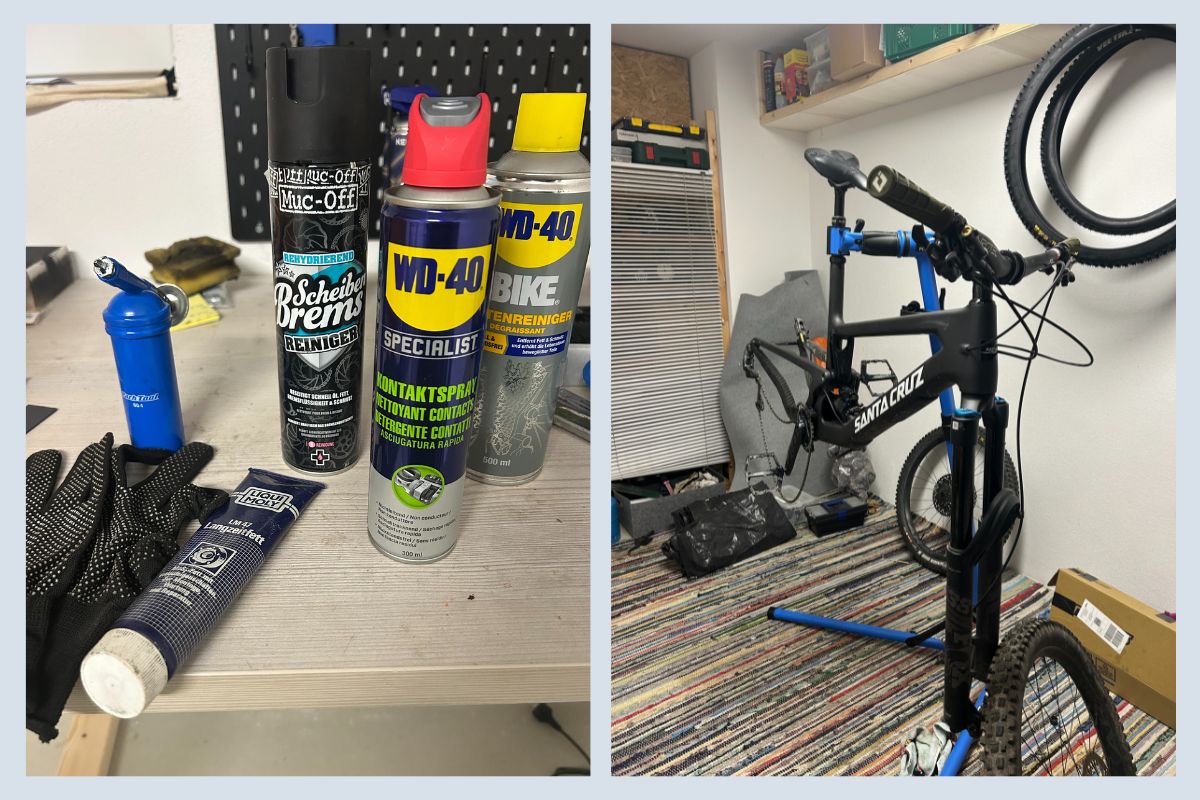
First comes cleaning and maintenance if your bike is going to be stored over the winter. Photo: Claudia Klingelhöfer
Brakes
- If possible, remove the brake pads or make sure they are not pressed against the brake disc for long periods of time. This helps prevent surface corrosion.
- In addition, with hydraulic brakes you can pull the brake levers toward the handlebar using rubber bands. This often saves you from having to bleed the brakes at the start of the next season.
Frame
- After cleaning, you can treat the frame and metal parts with a spray or care product that repels moisture. This helps prevent corrosion even in damp environments.
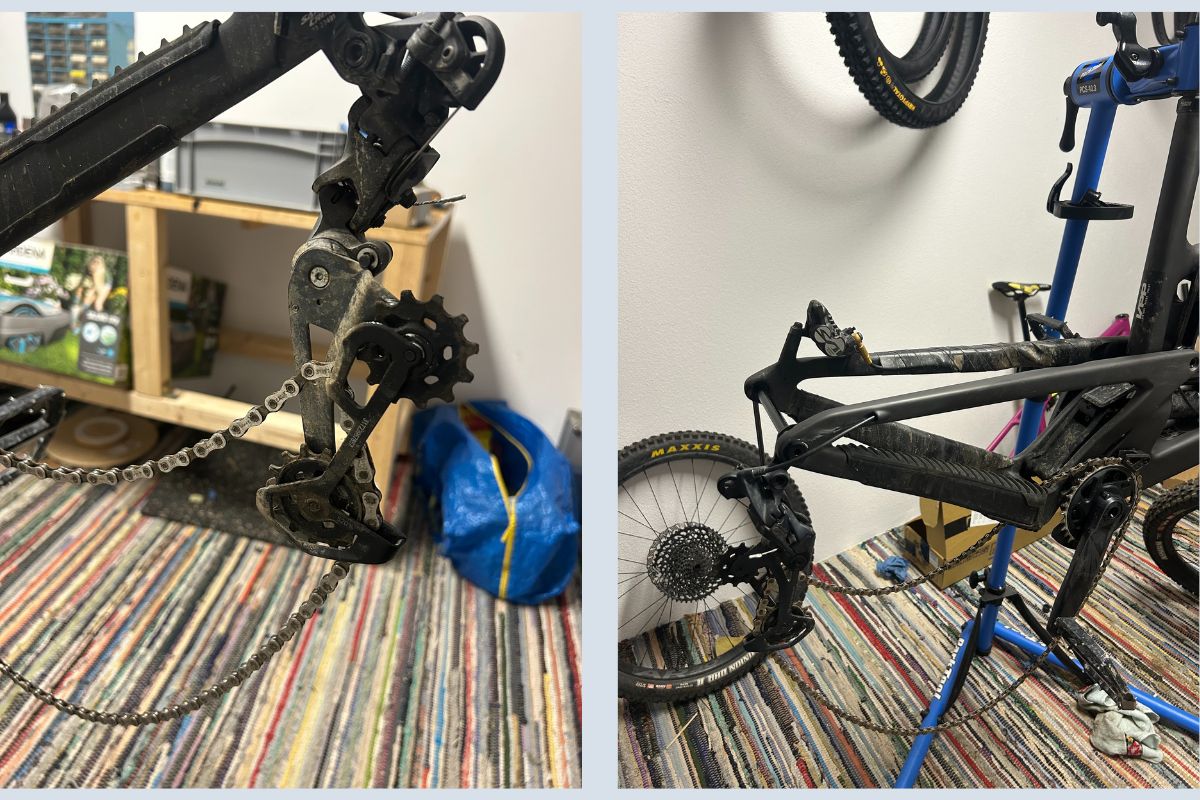
Cleaning the chain, drivetrain, and gears is an essential part of winter storage. Photo: Claudia Klingelhöfer
Tires
- Reduce tire pressure moderately – typically to around 1 bar (for robust tires) or according to the manufacturer’s recommendation. This reduces stress on the tire beads. Ideally, rotate the tires occasionally during winter storage.
- If you ride tubeless, top up a small amount of sealant.
Storage
- The ideal storage location is dry, frost-free, and has minimal temperature fluctuations. Hanging or standing? Hanging saves space and means you don’t need to rotate the tires.
However, for bikes with disc brakes, horizontal storage is recommended to keep brake pressure even and prevent air from entering the hydraulic system.
If you follow all of these steps, your bike will enjoy a reliable winter rest – and you’ll be able to get back on the trails in spring without needing extensive repairs.
2. WINTER RIDING: WHAT TO CONSIDER WHEN RIDING IN COLD, SNOW, AND MUD
If you continue riding through snow and mud, your mountain bike will need some extra winter care. Here are the key points to keep in mind:
Regular Cleaning After Every Ride
Winter conditions bring salt, fine mud, and dirt – all enemies of your bike. After every ride, you should clean the frame, drivetrain, and especially the down tube. It’s crucial that no salt remains on the frame or around bearing areas.
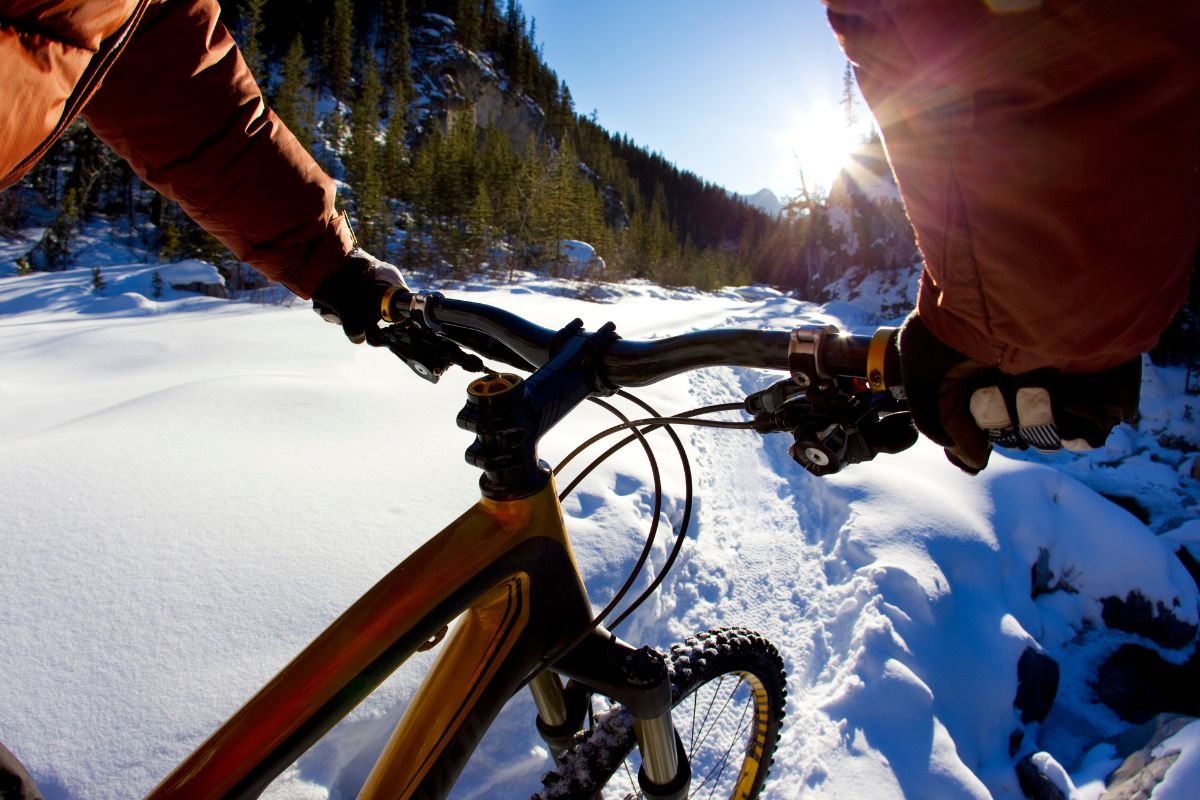
If you ride your mountain bike in snow, you should clean it thoroughly after every ride. Photo: Canva
Chain & Drivetrain
- Chain lubrication: In wet and muddy conditions, a moisture-resistant chain oil (“wet lube”) is the best choice. It adheres better in wet conditions but has the drawback of attracting more dirt.
- Wax vs. oil: Wax-based lubricants offer a clean drivetrain in dry conditions but lose effectiveness in wet weather. In real winter conditions, a high-quality wet lube is usually the better option in practice. If you’re considering switching to a waxed chain, it’s best to wait until spring.
- Clean components: Regularly clean the cassette, chainrings, and derailleur to remove dirt and buildup.
Brakes
- Brake pads wear faster in wet conditions – check them more frequently and replace them once the remaining material gets thin.
- Brake rotors can be cleaned with isopropyl alcohol to remove greasy residue.
- As in summer, make sure no oils or grease get onto braking surfaces – even minor contamination can significantly reduce braking performance.
Suspension Fork & Shock
- Regularly clean dust wipers and seals to remove mud and deposits, then apply a few drops of manufacturer-approved oil to the sealing surfaces. In extreme sub-zero temperatures, seals can become slightly stiffer.
Tires
- As a mountain biker, you’re likely already using wider tires with aggressive tread patterns – but if you’ve been riding relatively narrow, fast-rolling tires (e.g. 2.2″), switching to wider tires (around 2.4″) can be worthwhile for winter conditions.
- Tubeless systems are highly recommended, as they allow lower tire pressure without risking pinch flats. If you’ve been thinking about converting to tubeless, winter is actually the ideal time to do so.
- Reduce tire pressure moderately (e.g. by 0.2–0.4 bar) to increase the contact patch – but be cautious of rim strikes.
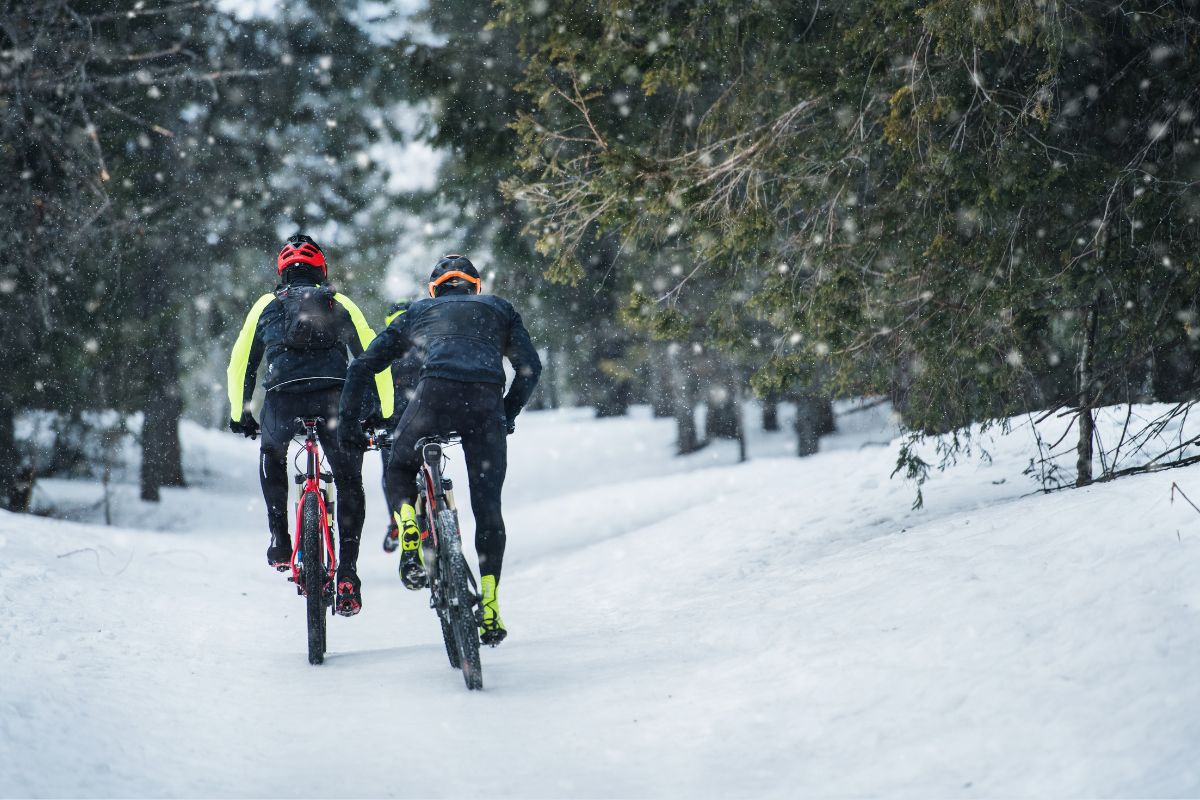
Wider tires or slightly reduced tire pressure can significantly improve grip in winter conditions. Photo: Canva
Frame, Corrosion & Surface Protection
- After each ride, use a damp cloth or mild care product to remove splashed dirt from the frame.
- Additional frame protection or protective film (e.g. on the chainstay) helps reduce wear caused by mud and debris.
- Metal parts such as bolts, pins, and fasteners should be checked regularly and lightly greased to prevent corrosion.
Threads & Contact Points
- Pedals, bolts, seatpost, stem: loosen occasionally, clean, and treat with fine grease or copper paste – especially if they’ve been exposed to road salt.
- Be careful not to let grease or oil enter moving components such as bearings, suspension bushings, or brake systems.
Mudguards & Accessories
- Lightweight mudguards help keep dirt and water away from the drivetrain, brakes, and suspension.
- If you ride in the dark, reflective elements or lights are essential during winter.
You Might Also Be Interested In:
- Mountain bike riding technique: 10 tips for better MTB technique
- Washing and caring for merino wool correctly: Your guide to longlasting functional clothing
- Trail running in winter: stay on track with these tips
- Replacing brake pads: How to change the pads on your bike