
 Login
Login
 Stores
 Cart
Cart

Have you set yourself a goal for this summer and want to line up for your first trail running race? Then the big question is: how do you prepare properly?
In this guide, you will learn how to train specifically for different distances, why elevation gain, strength training and recovery matter, and which gear you should already be testing during training. We have also created practical training plans for different distances, available as PDF downloads.
Key Takeaways
- 💓 Do not train by pace alone: In trail running, heart rate, perceived effort and elevation gain are often more meaningful than speed alone.
- 📈 Increase volume and elevation gradually: Especially if you are new to trail running, give your body time to adapt and build running technique, sure-footedness and strength step by step.
- 🎒 Test gear and nutrition early: Shoes, running pack, flasks, poles, gels, bars and drinks should all be tested under realistic conditions during training.
- 💪 Strength training and recovery are part of the plan: Stable legs, a strong core and enough rest help you move more efficiently and confidently on the trails.
- 📄 The right training plan helps you prepare for race day: Trailrunning Training Plan 15-20 km, Trail Running Training Plan 20-50 km, Trail Running Training Plan 50+ km
5 Tips Before Your Next Trail Running Race
If you have a trail running race coming up, these tips will help you prepare. Whether you are still in the long-term build-up or already standing on the start line at this year’s ZUT, we have practical advice for both the weeks ahead and the final countdown.
1. Start slowly and work on your running technique
Especially as a beginner, it is important to give your body enough time to adapt. That means:
- Increase your pace and elevation gain gradually to avoid overload.
- Start with routes you enjoy and vary the intensity.
- Focus on balanced running technique, dynamic arm movement and a stable upper body.
2. Variety is key
Trail running places different demands on the body than classic road running. Elevation gain, changing terrain, technical trails and long time on feet make varied training especially important.
- Easy runs at a comfortable pace, or heart rate zone 2, build the foundation.
- Interval training, such as short sprints or hill intervals, helps you build intensity.
- Fartlek runs and varied route profiles improve adaptability.
- Run flatter routes sometimes and hillier routes at other times. This helps you get used to different conditions.
3. Test nutrition on long runs
Once a week, you should include a longer run to build your aerobic base. This is also the best time to test your race nutrition. Keep the following in mind:
- Heart rate before pace: Train at around 60-70 % of your maximum heart rate.
- Do not forget nutrition: Drink around 500 ml of water per hour and start taking in carbohydrates after 90 minutes at the latest, around 60 g per hour.


4. Strength, coordination and recovery
Trail running demands a lot from your body. That is why additional training sessions should be a fixed part of your routine, for example:
- Stability training: Focus on your core, ankles and leg axis stability.
- Coordination and running technique: Running drills and coordination exercises before your run help you move more cleanly.
- Recovery: Foam rolling, mobility exercises, yoga and stretching help your body relax.
5. Tapering before race day
The final phase before a race is called tapering. During the last one to three weeks before the event, the goal is to reduce fatigue and arrive fresh:
- Reduce your training in a targeted way to shed fatigue, refill energy stores and build mental freshness.
- For example, cut your training volume by around half in the week before your trail running race.

Foto: Sport Conrad
What Makes Trail Running Training Different from Regular Running Training?
Trail running is much more varied than classic road running. Changing surfaces, climbs, downhills and technical sections challenge endurance, strength, coordination and concentration at the same time. While road running is often more consistent, the load in trail running changes constantly. Uphill, your calves, hip flexors, glutes and cardiovascular system work much harder. Downhill, the front thigh muscles are heavily loaded through repeated braking movements. This is exactly why elevation gain and downhill sections are essential parts of trail running training.
The surface also plays a major role. Roots, rocks, loose dirt and narrow paths require sure-footedness, balance and quick reactions. On trails, you automatically train stability and coordination as well. Additional strength and stability work can help you move more safely and efficiently.
In trail running, pace is less meaningful than it is on the road. Elevation gain, terrain and weather all have a clear impact on speed. Many trail runners therefore use perceived effort, heart rate or elevation gain as better training guides. On steep climbs, brisk hiking is often more efficient than running and is completely normal, especially on longer distances.
Does Training with a Heart Rate Watch Make Sense for Trail Running?
A heart rate watch is very useful for trail running because pace can vary so much. Climbs, technical terrain and elevation gain constantly change your speed. A slow pace does not automatically mean low effort, and a faster pace does not always mean high effort.
Heart rate gives you a more realistic picture of the actual training load. Many trail runners therefore train with heart rate zones. The starting point is your individual maximum heart rate, or HRmax. As a rough guideline, you can calculate it with the formula 220 minus your age. You can also estimate it through a self-test. For more precise and individual values, professional performance diagnostics are recommended.
Factors such as heat, altitude or lack of sleep can also increase your heart rate without the actual effort being higher. Understanding this helps you interpret your heart rate data more realistically. For most trail runners, a GPS watch with heart rate tracking and an altimeter is more than enough.
In addition to using a heart rate watch, it is worth developing a good sense of your own effort. In sports science, this is known as RPE, or Rate of Perceived Exertion. On a scale from 1 to 10, RPE describes how hard an effort feels. The advantage: RPE responds immediately, while heart rate often reacts with a delay, especially on short, steep climbs. Experienced trail runners therefore combine both methods.


Test Your Trail Running Gear During Training
In trail running, gear plays a much bigger role than in classic road running. Especially for longer distances or alpine races, it is part of proper preparation to train early with the equipment you will use on race day.
Trail running shoes are especially important. They should not only fit well, but also suit the terrain and the race distance. A technical mountain trail places very different demands on grip and stability than an easy forest path. Never wear new shoes for the first time in a race. Break them in properly beforehand and test them on longer downhill sessions too. Read more here about how to find the right trail running shoe for you!


You should also use your trail running pack or running belt during training. Even small pressure points or poorly fitting flasks can become uncomfortable over long distances. If you plan to run with trail running poles, practise using them early. Poles are mainly used uphill in trail running. They reduce the load on the leg muscles and help you use your strength more efficiently. Downhill, they are usually folded away because they can interfere with natural arm movement and get in the way on technical terrain. Technique, rhythm and quick folding and unfolding should all be practised well before your first race.
You will find a detailed overview of suitable gear and packing lists for different distances in our trail running equipment guide.


Trail Running Training Plans Including PDFs
A structured training plan for different trail running distances helps you build endurance, strength and technique step by step. It is not only about running kilometres. Elevation training, downhill technique, recovery, nutrition and the right gear all play a key role in trail running. Trail running training plans also differ significantly depending on distance: shorter races often focus more on pace and running technique, while longer trails make energy management, strength endurance and mental resilience increasingly important.
We have created three practical PDF training plans for different distances, ready for you to download.
Trail Running Training Plan 5-20 km: How to Get Started
Because trail running combines so many different elements, beginners benefit especially from a structured training plan that improves not only endurance, but also strength, coordination and sure-footedness.
At first, the focus is on building aerobic endurance. A good starting point is 3 sessions per week: two easy endurance runs on the road or on light terrain, plus one more technical trail session. Plan a recovery week with reduced training volume every 4 weeks. Moderate hill intervals are especially valuable. Even short climbs noticeably improve strength endurance and uphill running technique. Conscious downhill training is just as important. Many beginners waste unnecessary energy downhill or brake too much. For first races, your long training runs do not need to be extremely long. If you are preparing for a 10 or 20 km trail, you will often benefit more from regular sessions on technical terrain than from single very long runs.
Running training can be usefully complemented with targeted strength training for the legs, core and stability. Single leg exercises such as single leg squats or step ups are especially relevant. Lunges, calf raises and planks round off the programme and can easily be done at home without equipment.
Good first goals include shorter trail running races such as the Grainauer Trail at the Zugspitz Ultra Trail with 16 km and 760 m of elevation gain, or the short course of the GaPa Trail with around 10 km and 350 m of elevation gain.
You can download a suitable trail running training plan for short distances up to 20 km here. It guides you week by week over half a year towards your first race. The plan assumes that you already have basic running experience, around 5-10 km per run, and that you usually run on asphalt.
Download our trail running training plan for distances up to 20 km as a PDF: Trailrunning Training Plan 15-20 km
Trail Running Training Plan 20-50 km: Ready for Middle Distances
For distances between 20 and 50 km, trail running training changes significantly. While shorter races often still focus on pace and running technique, strength endurance, energy supply and elevation gain become increasingly important. At the same time, the amount of time you spend running in training and later in the race increases considerably.
Four running sessions per week form the foundation, complemented by strength training and sufficient recovery. If you already have solid off-road running experience and recover well, you can add a fifth session in the second half of the training plan. Longer trail runs play a central role. They help your body get used to long efforts and plenty of elevation gain. The training terrain should be as race-specific as possible: if you are planning an alpine trail race, you should also train on demanding trails. From the second half of the training plan onwards, it makes sense to include so-called back-to-back sessions. These are two longer runs on consecutive days. They teach you to keep moving efficiently even on tired legs. For trail running races between 30 and 50 km, this is an important part of preparation. However, make sure not to introduce these sessions too early, as this would significantly increase the risk of overload.
Downhill training becomes more important in this distance category. Long downhill sections put a huge load on the muscles. Targeted eccentric strength training, such as lunges, step downs or controlled single leg squats, prepares the legs for this. Stability exercises for the core and ankles help you stay secure on technical trails, even in the second half of the race.
At this distance level at the latest, your nutrition strategy needs to become a fixed part of training. Test which gels, bars or drinks you tolerate under load. Many race-day problems come from a nutrition strategy that has never been tested under realistic conditions.
A race in Garmisch-Partenkirchen that you can train towards is the Mittenwald Trail, with 44 km and over 2,110 m of elevation gain. If you want a slightly easier introduction to middle-distance trail running, the Garmisch-Partenkirchen Trail, with 29 km and 1,565 m of elevation gain, is another great option. Both routes are part of the Zugspitz Ultra Trail. At the GaPa Trail, the middle distance, 20 km and 850 m of elevation gain, and the long distance, 26 km and 1,050 m of elevation gain, offer further exciting goals.
You can download a suitable training plan for distances from 20 to 50 km directly here as a PDF: Trail Running Training Plan 20-50 km
Trail Running Training Plan 50 km+: Preparing for Ultratrails
Ultratrails are no longer classic running races. They are long endurance challenges where fitness is only one of many requirements. Mental strength, nutrition strategy, sleep and recovery management, and smart pacing are just as important for reaching the finish line.
Anyone moving towards ultra trail running usually already has solid experience. A one-size-fits-all training plan is difficult to create because experience level, target distance, terrain and available training time vary so much. What can be said, however, is that training should be planned long-term. Even with very good fitness and endurance sport experience, we recommend at least 6 months of targeted preparation.
The main focus is on long trail runs with plenty of elevation gain and moderate intensity. Time on feet matters more than pace. Back-to-back runs, meaning two longer sessions on consecutive days, become a standard element in the build phase because they deliberately train the body under pre-fatigue. In many ultratrails, time on course can extend into the night. Navigating with a headlamp, the changed feeling of moving in the dark and the effects of sleep deprivation are all factors you only truly understand through experience. That is why you should include night runs in your preparation.
For nutrition, gels alone are not enough on long distances. You also need to practise eating solid food such as bread, rice cakes or potatoes while under load. Strength training remains relevant at this level too, but the focus shifts more towards core stability, hip strength and eccentric leg loading – exactly the structures that need to stabilise you over hours of long descents.
For experienced trail runners, the Garmisch-Partenkirchen region offers challenging goals that can be a strong source of motivation during training. These include the long and ultra distances of the Zugspitz Ultra Trail, such as the Leutasch Trail, 69 km and 3,140 m of elevation gain, the Ehrwald Trail, 86 km and 4,295 m of elevation gain, the Ultratrail, 107 km and 5,280 m of elevation gain, and the ultimate challenge: the ZUT 100, 166 km and 8,205 m of elevation gain. The GaPa Everesting Festival, with 59.4 km and 8,848 m of elevation gain, is also a powerful training goal for ambitious runners.
Unlike the plans up to 50 km, we have not created a weekly plan for ultra distances because individual experience and routines have a major influence on training for highly advanced athletes. Instead, we have developed a 6 month phase-based training plan for ultratrails, which you can download here: Trail Running Training Plan 50+ km

Foto: Sport Conrad
Strength Training for Trail Running
Strength training is an equally important part of a well-designed training plan for trail runners. Especially in the mountains, significantly higher forces act on muscles, joints and connective tissue than during classic road running. Targeted strength training therefore not only helps you become more powerful, but can also noticeably reduce the risk of injury.
Long climbs continuously challenge the calves, quadriceps and glutes. Downhill, strong braking forces are added. The muscles work eccentrically, meaning they lengthen while under tension. In runners who are not used to this load, exactly this type of stress often leads to deep muscle soreness in the thighs, knee problems or irritation of the patellar tendon. If you train downhills regularly and strengthen your legs in a targeted way, you can effectively prevent these typical issues.
Strength training also improves control on technical trails. If you train your core, hips and ankles regularly, you will move more securely over roots, rocks and uneven ground. Functional exercises that involve several muscle groups at once are especially valuable for trail running:
- Single leg squats
- Lunges and lunges with rotation
- Step ups and step downs
- Single leg calf raises
- Planks and side planks
- Single leg balance training, ideally on an unstable surface
- Jump exercises for coordination and reactivity
The longer and more technical the trails become, the more important core stability becomes. A stable body position saves energy and improves downhill control. Targeted mobility training is also worthwhile: hip openers, calf stretches after long downhills and ankle mobility exercises help maintain mobility and resilience in the long term.
Recovery: Why Progress Happens During Rest
The actual training effect does not happen during the session itself, but during recovery afterwards. Only in the rest phases does the body adapt: muscles regenerate, energy stores are refilled and the cardiovascular system improves over time.
The most important recovery factor is sleep. Most repair and adaptation processes in the body take place during sleep. Especially in intensive training weeks or before races, sufficient sleep should not be seen as a luxury, but as part of the training plan.
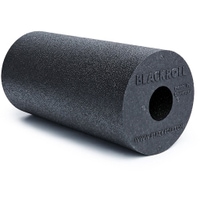
Not every rest day has to mean complete inactivity. Walks, easy cycling or light mobility training promote blood flow and help the muscles return to normal more quickly. Many trail runners also use foam rollers or massage balls, especially to improve circulation and release tight areas. Hips, calves and ankles in particular can benefit from this after long trail runs.
After intense sessions, the body needs carbohydrates to replenish glycogen stores and protein for muscle recovery. We recommend taking in both as soon as possible within 30 to 60 minutes after training.
Progress does not come from stacking as many hard sessions as possible. It comes from the right balance between load and recovery. Good training plans therefore deliberately include easier weeks with reduced volume.



Conclusion
Training for a trail running race is varied and demanding. If you want to prepare well for an event, you should think beyond running kilometres and also include elevation gain, downhill technique, strength training, coordination and recovery. A structured training plan helps you move more safely, efficiently and with more enjoyment in the mountains. Test your gear early, listen to your body and give recovery just as much space as your harder sessions. With the right preparation, nothing stands in the way of your next trail running adventure!