
 Login
Login
 Stores
 Cart
Cart
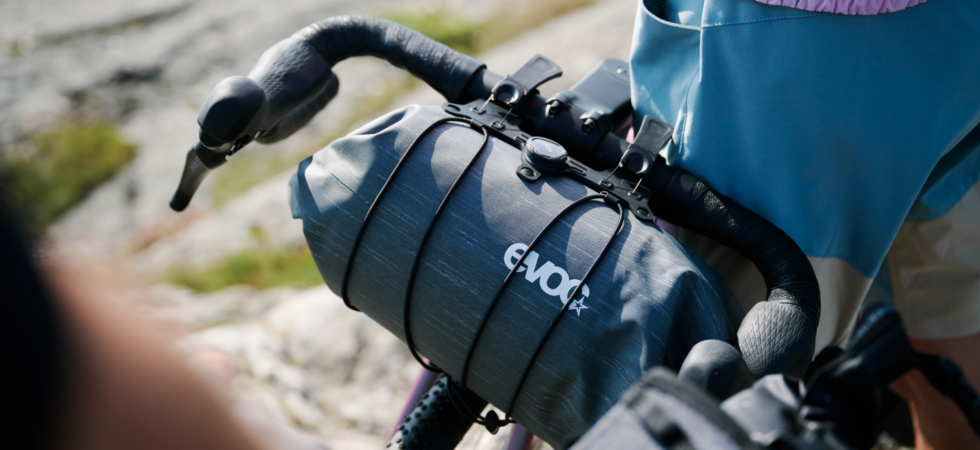
Road bikes and gravel: How to wrap your handlebar tape correctly
In our do-it-yourself guide for bikers, you can learn how to wrap handlebar tape correctly. Our step-by-step instructions and tips apply to road and gravel bikes. And don’t worry if you’re doing this for the first time, our author has also received tips from professional cyclists, but this is the first time she has changed her handlebar tape on her own. So she knows the special challenges.
How often should you change your handlebar tape?
Of course, this depends entirely on how much you ride your bike and whether it is often left outside. You should always replace it if it tears or is very worn. Handlebar tape protects the handlebars from sweat and dirt, while at the same time cushioning small impacts and protecting your wrists and forearms. It therefore makes sense to replace the handlebar tape regularly. For regular amateur cyclists, this is probably every season.
What materials do you need?
You don’t need much for the replacement: a clean cloth, tyre levers, scissors, some brake cleaner or isopropanol if necessary, insulating tape and, of course, a new handlebar tape. Choose a handlebar tape that suits your riding style – classic cork, grippy with gel, perforated or stylish leather. It is important that the tape is long enough and has an adhesive surface on the back. As a rule, new end caps and an adhesive tape for the end are also supplied.
Step 1: Remove the old handlebar tape
To remove the old handlebar tape, pull up the rubber grips on the brake levers and remove the handlebar end plugs. Then you can remove the old tape. It makes sense to start in the centre of the handlebars. You can try to remove any adhesive residue with a cloth and some brake cleaner or isopropanol. This didn’t work so well for me. A few adhesive residues that I didn’t remove from the handlebars didn’t affect the ‘wrapping result’ afterwards. The handlebars should be free of grease and (reasonably) smooth at the end – whether for your road bike or your gravel set-up.


The first step is to remove the old handlebar tape. Photo: Claudia Klingelhoefer
Step 2: Check the fixing of the brake and shift cables
Once the old handlebar tape has been removed, you will see whether it is necessary to reattach the shift and brake cables underneath. If so, remove the old fixing tape and replace it with new tape. This is also a good opportunity to check that the cables are intact.
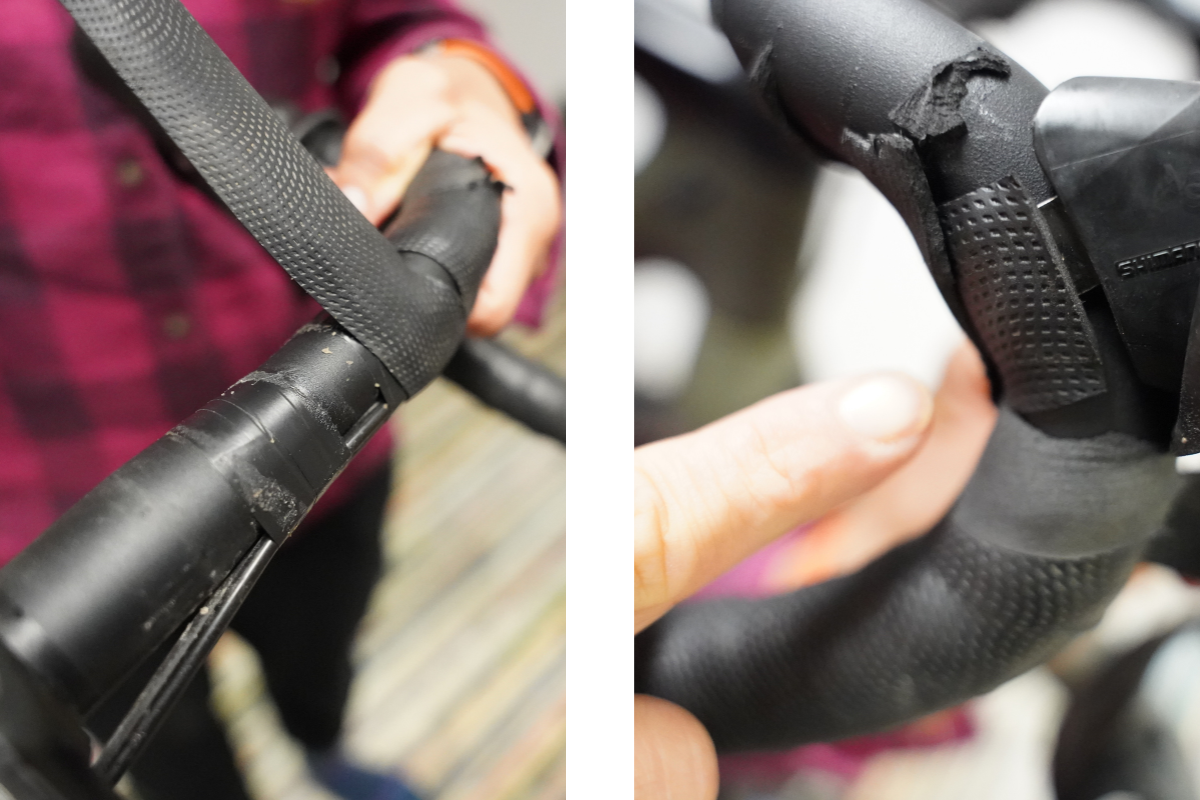
 If necessary, remove the old fixing tape and replace it with a new one. Photo: Claudia Klingelhoefer
Step 3: Start at the handlebar end and wrap from the outside to the inside
Now it’s time to start wrapping the actual handlebar tape: Start at the handlebar end with a small overhang, which will later be fixed by the end cap. Wrap the tape tightly and evenly towards the stem. Each turn should overlap by about a third. Whether on a gravel or road bike, this technique ensures optimum grip and good pressure distribution.
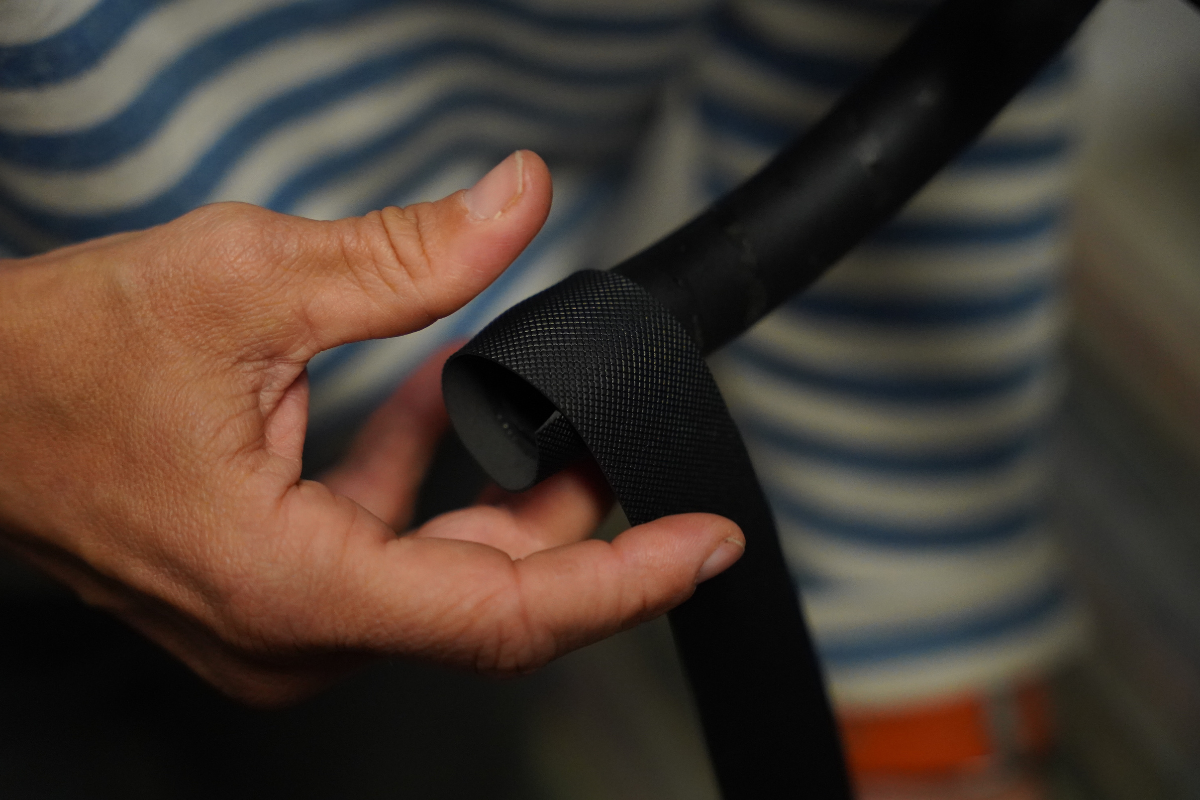
Work from the outside to the centre and wrap the ribbon tightly and evenly around it. Photo: Claudia Klingelhoefer
Step 4: Winding on the brake lever
The brake lever is the most complicated part. You can either:
– make a crossover wrap where you wrap the tape neatly around the lever, or
– use a small extra piece of tape that you position under the lever to avoid gaps.

There are two different variants for the winding on the brake lever. Photo: Claudia Klingelhoefer
Both options work.
My handlebar tape came with a short extra piece of tape that I was able to stick in the area of the brake clamp. I then wrapped the actual handlebar tape over it.
Step 5: Neat finish
When you have reached the upper part of the handlebars, cut the tape at an angle so that the end is nice and flat. If you feel that the handlebar tape needs additional fixing, use some insulating tape. Then apply the supplied end tape over it. Finally, press in the end plugs – they will reliably hold the excess tape in place.

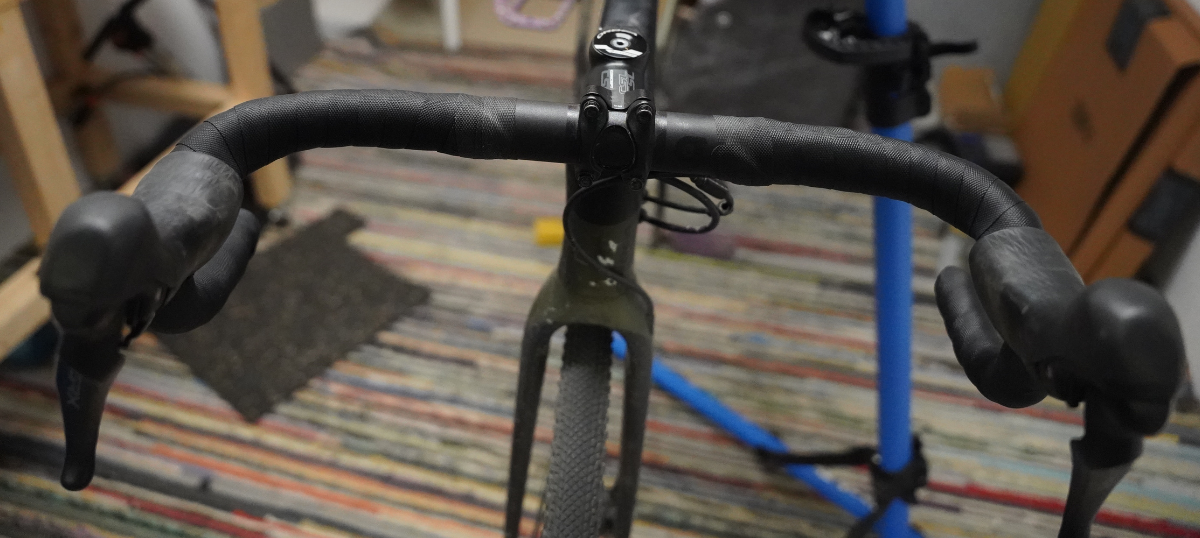 Once you have reached the end, cut the ribbon so that it ends flat. Photo: Claudia Klingelhoefer
Conclusion: Calm and tension for new handlebar tape
Whether for long tours on tarmac or adventures on gravel, a well-wrapped, comfortable handlebar tape can make all the difference. With a little patience and these instructions, you can create the perfect wrap – for road bikes and gravel bikes equally.
Might be interesting for you, too:
- Clean Your Bike Like a Pro – In Just 3 Steps
- The CONradl Bike Boutique: More than just a bike store
- Ride Fair – sustainable and responsible mountain biking