
 Login
Login
 Stores
 Cart
Cart
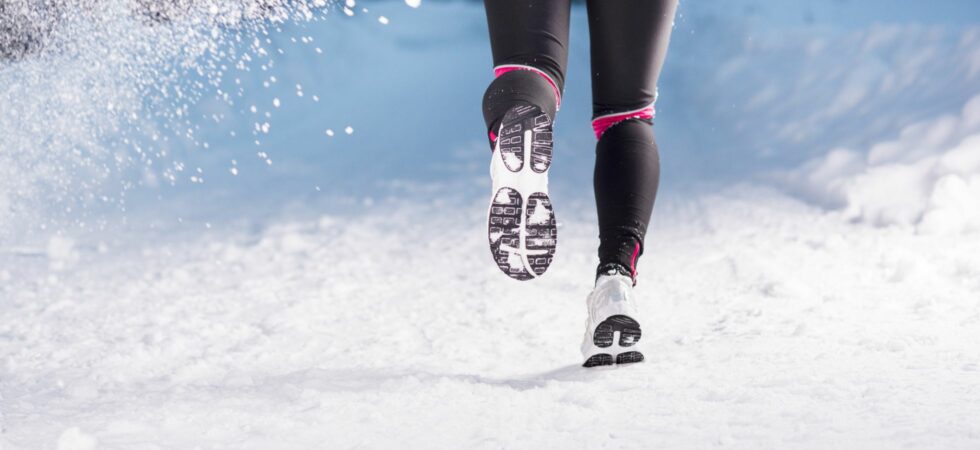
Whether you’re hiking, trail running, or commuting to work: if you’re outdoors in autumn and winter, you need shoes with a grippy sole. Slippery leaves, wet rock, or compacted snow can quickly become a hazard. In this guide, we’ll show you what to look for when choosing a sole, which accessories provide extra traction, and how to care for your shoes properly.
1. Sole types at a glance – more grip in challenging conditions
For a shoe to deliver reliable traction on wet ground, leaves, or snow, several factors must work together: rubber compound, tread design, lug depth and layout, and the flexibility of the sole construction. The main distinctions include:
Soft rubber compounds: Ideal on wet surfaces because they “stick” better. Downside: faster wear on asphalt.
Hard rubber compounds: More robust and durable, but with less grip in wet conditions. Well suited to rocky or mixed terrain.
Multidirectional lugs: Provide lateral stability, for example on traverses or leaf-covered trails. Especially beneficial for trail running and forest paths.
Self-cleaning deep tread: Mud or snow releases more easily during the roll-off, preventing the sole from clogging up.
Flat tread or friction soles: Excellent on smooth surfaces (rock, urban environments), but less effective on soft ground.
Special soles for ice and snow: Feature cold-flex rubber compounds (e.g. Arctic Grip, Icebug BUGrip) or glass particles to increase friction on ice.
Well-known sole brands such as Vibram®, Contagrip®, or Missiongrip™ vary within their own ranges depending on the intended use. What matters most is not the brand name, but the combination of sole type, tread pattern, and shoe category.
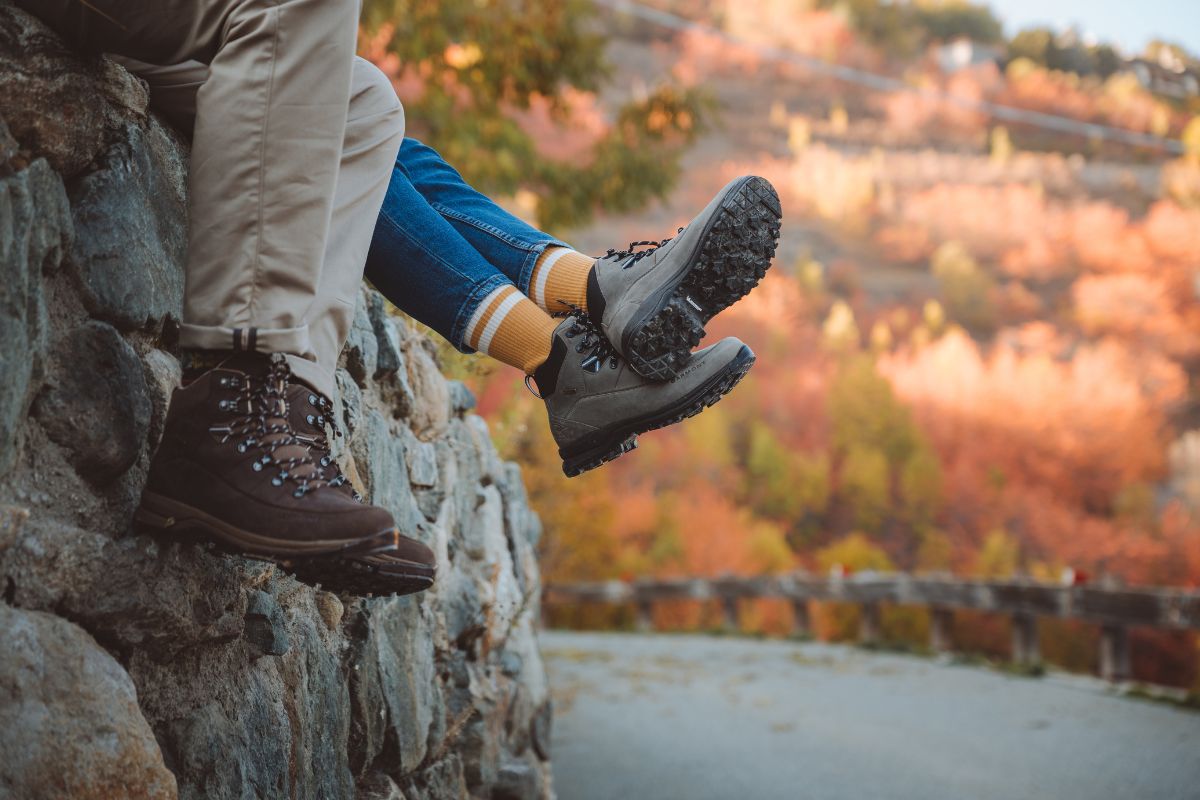
The soles and tread pattern are crucial for grip on wet surfaces or snow. Photo: Garmont
2. Use cases: which sole for which purpose?
Not every sole performs equally well on every type of terrain, so it’s important to match the sole to your activity.
If you’re hiking a lot in autumn—out with kids or the dog on damp forest paths or leaf-covered trails—shoes with soft rubber, a coarse anti-slip tread, and multidirectional lugs are a great choice.
For winter hiking or snowshoeing, look for shoes with deep tread patterns and a stiffer sole that can also accommodate microspikes or crampons. A waterproof upper is essential here.
If you’re mainly in the city and need everyday winter shoes, flat tread soles with optional spike compatibility and a cold-resistant rubber compound make sense. This setup keeps you secure on icy sidewalks.
If you’re heading into alpine terrain or onto rock in winter, choose shoes with a friction-optimized sole, rubberized edges, and a precise fit to ensure good foothold.
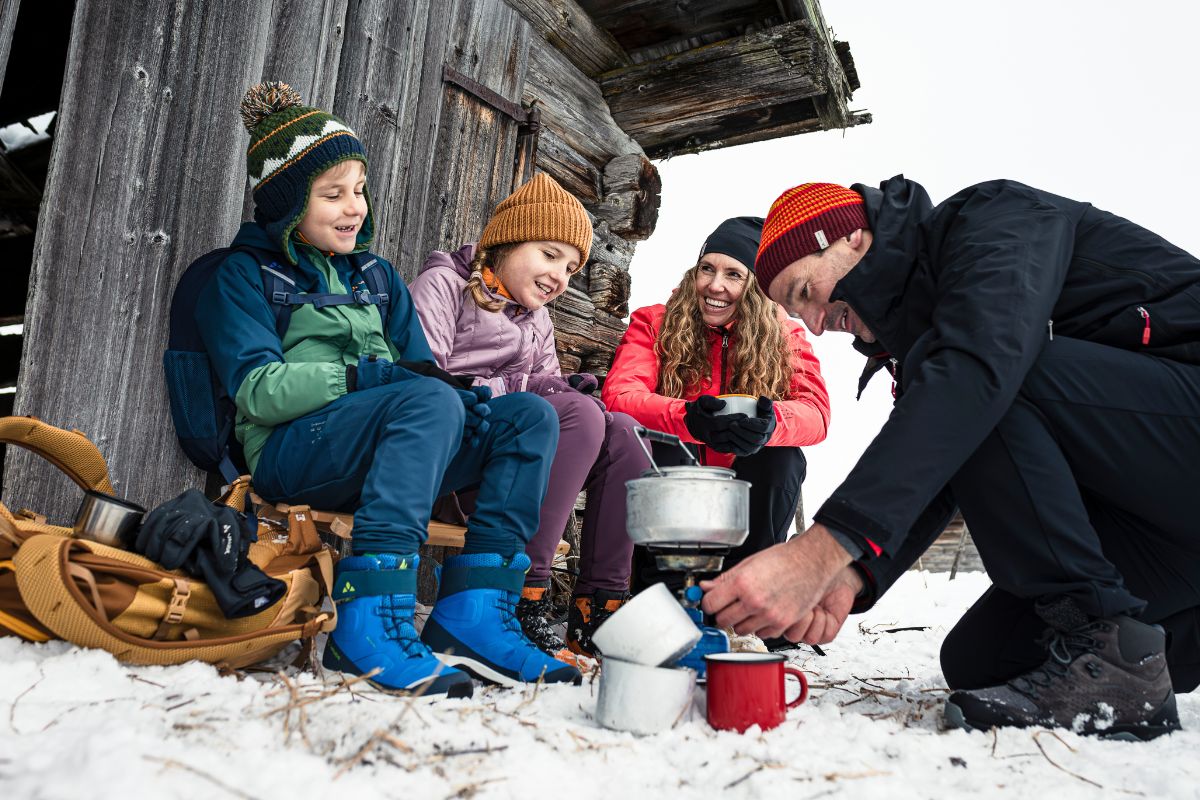
Not every sole is suitable for use in snow: soles with a deep tread are particularly advantageous for winter hiking. Photo: Vaude
Lightweight, flexible shoes are key for trail running from autumn through early spring. An aggressive tread pattern (such as Contagrip® or similar) combined with good cushioning will support you best.
At Sport Conrad, you’ll find a wide selection of winter shoes with profiled soles for trail running, winter hiking, and alpine use from brands like Salomon, On, Scarpa, Dynafit, La Sportiva, and Lowa.
3. Care tips for long-lasting grip
Proper care keeps your shoes performing well for longer. Dirt and mud can build up in the tread and significantly reduce traction. Keep the following in mind:
- Clean regularly: Remove coarse dirt after every outing. Simply rinse with water and use a brush if needed.
- Avoid drying on heaters: Heat can make rubber brittle. Let shoes dry overnight at room temperature and stuff them with newspaper.
- Use rubber care products: Special treatments keep the material supple and grippy.
- Check the tread: If the tread is badly worn, even the best rubber compound won’t help. At that point, it’s time for new shoes—or resoling, which can be worthwhile especially for hiking boots.
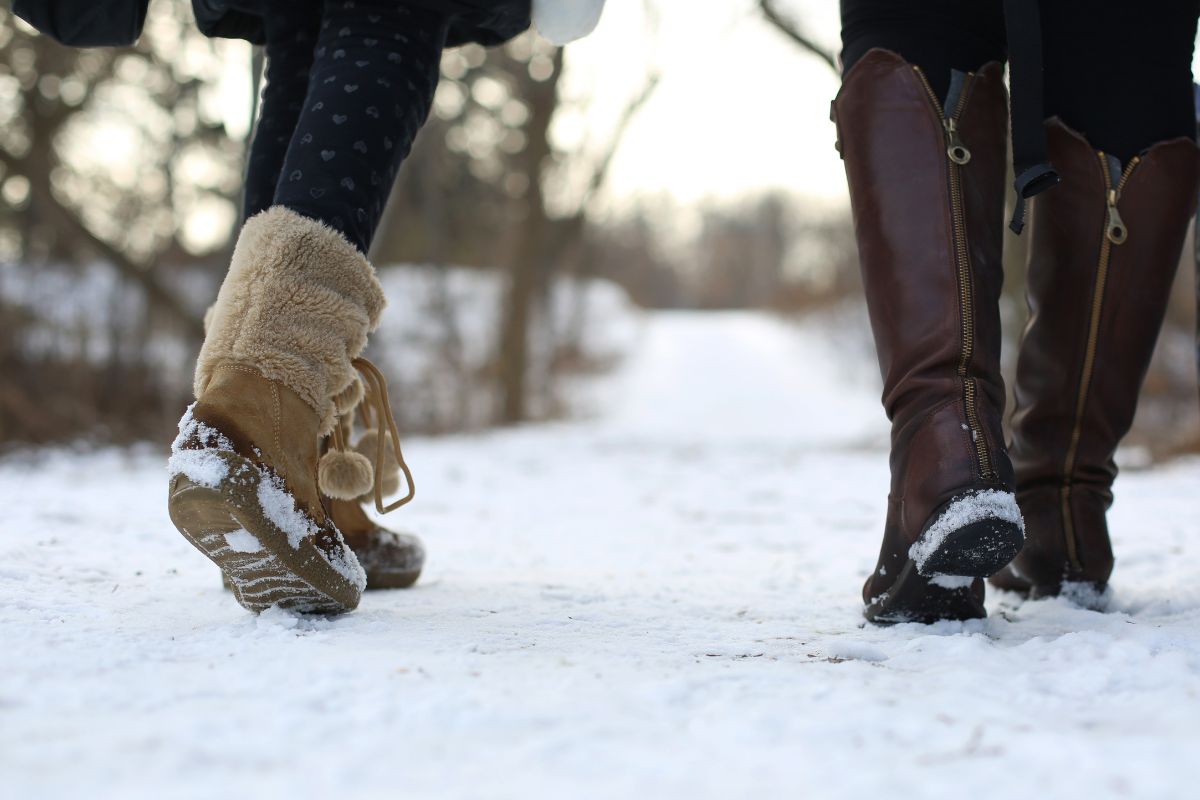
To ensure that shoes and soles remain suitable for snow for a long time, they need to be cared for. Photo: Canva
4. Practical accessories: spikes, micro-crampons, and gaiters
Sometimes even the best sole isn’t enough—such as on frozen ground, steep ice slabs, or deep snow. These accessories can help:
- Spikes: Lightweight metal studs that slip over your shoes. Ideal for icy forest roads or sidewalks.
- Micro-crampons (Grödel): Small crampons with spikes for alpine winter hikes or sledding ascents. They attach flexibly to sturdy winter or hiking boots.
- Gaiters: Protect against snow and moisture from above, keeping feet dry and warm—especially useful in deep snow or mud.
If you want to stay sure-footed through autumn and winter, you need more than just warm shoes. The key is the right combination of a grippy sole, the correct use case, and—when necessary—smart accessories. With the right footwear, taking the first step outdoors is possible even in bad weather.


You might also be interested in: