
 Login
Login
 Stores
 Cart
Cart
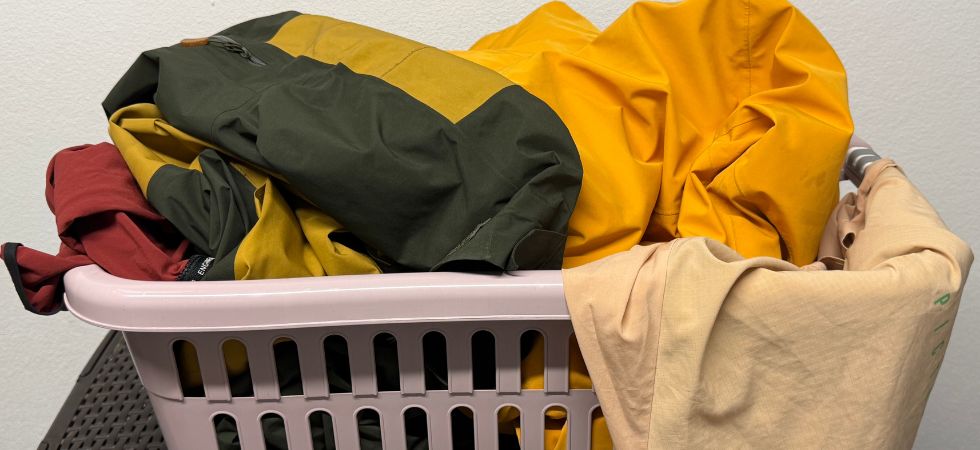
Whether it is a running top, cycling jersey or softshell jacket, most sportswear is made from technical fabrics that react very differently to heat, detergent and fabric softener than a regular pair of cotton trousers. Wash it like your everyday clothes and it can quickly lose breathability, hold on to unpleasant odours even after washing or wear out sooner than it should.
In this guide, you will learn how to wash your sportswear properly, which wash cycle to choose, when to avoid the tumble dryer and how to make your laundry routine as sustainable as possible. We will also cover how to care for waterproof and water repellent outdoor clothing.
Key points at a glance
- 🧺 Take sportswear out of your bag straight after training, let it air out and rinse it briefly if needed.
- 🌡️ A gentle, delicate or sports cycle at 30°C is usually enough. Only wash at 40°C if the care label allows it.
- 🧴 Use a specialist detergent for sportswear and technical clothing, and avoid fabric softener to protect the performance of the fibres.
- 🧵 Wash synthetic fabrics regularly. Merino wool, on the other hand, often only needs a good airing and should be washed less frequently overall.
- 🌧️ Wash waterproof and water repellent outdoor clothing only when necessary, and reproof it when the water repellency starts to fade.
- ☀️ Air dry sportswear whenever possible, as heat can damage many technical fabrics.
- 🌱 Lower temperatures, careful detergent dosing and a wash bag make your laundry routine more sustainable.
After training: the first step in caring for sportswear
The longer sweat sits in the fibres, the harder it becomes to remove odours later on. Take your sportswear out of your bag as soon as possible after training and hang it up to air, rather than leaving it in your backpack or laundry basket. If your technical top is soaked with sweat, it is worth giving it a quick rinse with clean water in the shower before hanging it up ahead of the actual wash. This removes much of the sweat straight away and helps protect the fibres, as salt and bacteria have less time to work their way into the fabric.
How to prepare sportswear for washing
Before your sportswear goes into the machine, turn it inside out and close all zips and hook and loop fasteners. This helps prevent the fabric from roughening, reduces pilling and protects other delicate garments in the wash. Technical clothing should also be washed separately from everyday items such as jeans or towels, as their coarser fibres create more friction. A laundry bag offers additional protection against snagging, especially for sports bras and compression clothing. And it is always worth checking the care label: it tells you the maximum temperature and whether the garment is suitable for machine washing at all.
Wash cycle, temperature and detergent
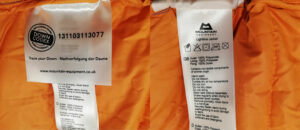
For most technical fabrics, a gentle or delicate cycle at 30°C is more than enough to remove sweat odour, bacteria and light dirt. Many newer washing machines even have a dedicated sports or outdoor programme. For heavily soiled clothing or stubborn odours, you can increase the temperature to 40°C, as long as the care label allows it. If you are unsure whether tougher stains will come out, you can pre treat them with gall soap, for example. Use a mild liquid detergent and dose it sparingly rather than generously. Ideally, choose a detergent specifically developed for sportswear and technical clothing. Avoid fabric softener completely when washing sportswear. It coats the fibres like a film, blocks the pores and makes the garment less breathable. As a result, sweat is more likely to stay trapped in the fabric instead of being transported away from the body.


Different materials need different care
Synthetic fibres such as polyester, polyamide and elastane
Most training clothing is made from these synthetic fibres because they are light, wick moisture effectively and dry quickly. However, their smooth surface also makes it easy for sweat and bacteria to cling to the fabric, which is why they should be washed regularly. A gentle cycle at 30°C with a mild detergent is sufficient. Avoid fabric softener, as it can impair the breathability of the textile.


Merino wool
Merino behaves differently. This natural fibre has inherent antibacterial properties, meaning merino garments barely smell of sweat even after being worn several times. That is why merino is often the first choice for multi day tours with minimal luggage or for backpacking trips. Even after sweaty training sessions, airing merino clothing thoroughly is often enough. You only need to wash merino sportswear after three to four training sessions. Use a wool cycle, wash cold or at a maximum of 30°C, and choose a low spin speed. Merino sportswear should never be washed together with garments made from coarse fabrics.


Waterproof and water repellent outdoor clothing
Waterproof jackets and trousers with a water repellent finish should be washed less often than regular sportswear, as every wash cycle wears down the treatment a little. Membrane manufacturers such as Gore-Tex also recommend using a gentle or easy care cycle without spinning.
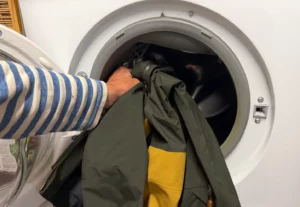
Before washing, close all zips and tighten elastic drawcords so nothing can get tangled. Most manufacturers recommend using a specialist outdoor detergent for membranes and water repellent finishes.
Membrane specialist Gore-Tex states that a regular detergent is also sufficient. In any case, it should be a liquid detergent, and you should avoid fabric softener. If you have a particularly stubborn stain on your outdoor clothing, you can soak and pre treat it in the sink with detergent. An extra rinse cycle at the end is also worthwhile to make sure all detergent residue is washed out of the fibres.
If the water repellency starts to fade, you can refresh it with a reproofing spray. Some manufacturers then explicitly recommend a short tumble dry at low temperature so the heat can reactivate the water repellent finish. Whether this applies to your garment will be stated on the care label or in the manufacturer’s instructions.


How to dry sportswear properly after washing
For most technical fabrics made from polyester, elastane or nylon, the tumble dryer is off limits. Heat can make elastic fibres brittle, reduce breathability and noticeably shorten the life of the garment. It is better to hang your sportswear up to air dry, but not in direct sunlight, as UV radiation can also damage elastane.
Waterproof and water repellent outdoor clothing can also be air dried. However, some manufacturers recommend a short low temperature tumble dry for garments with a membrane. Simply check the manufacturer’s instructions on the care label. GORE-TEX, for example, recommends tumble drying when the water repellent performance starts to fade: 20 minutes at low temperature helps reactivate the water repellent finish through heat.
How to wash sportswear more sustainably
Every wash releases tiny plastic fibres from synthetic sportswear. These microplastics can enter rivers and oceans through wastewater. Depending on the material and wash temperature, tens of thousands to more than a hundred thousand micro particles can be released per wash cycle. A dedicated wash bag for synthetic laundry can capture a large proportion of them.
You can also reduce your environmental impact by choosing lower temperatures and a low spin speed, using detergent sparingly and only putting sportswear in the machine when it really needs washing. Choosing durable, high quality garments also helps in the long run, as they last longer and do not need replacing as quickly.
More care tips for sportswear
🍶 Vinegar is a real all rounder and can help remove soap residue, limescale, greying and odours in a more environmentally friendly way. You can use vinegar to spot treat suitable textiles. However, it is not a substitute for detergent, as it does not reliably remove dirt, grease and sweat residue. You should also use it sparingly in the washing machine and follow the manufacturer’s instructions, as the acid it contains can damage seals and hoses.
❄️ Another tip is to use the freezer against odours. Place sweaty clothing in a bag and leave it in the freezer overnight. Cold can temporarily inhibit odour forming bacteria, but it does not replace a proper wash and only works for a short time.
🎒 Do not forget your sports bag either. It collects moisture and bacteria just like your clothing and should be washed regularly or at least aired out properly, provided the material allows it.
Frequently asked questions about washing sportswear
How often should you wash sportswear?
Synthetic clothing is best washed after every intense training session. Merino wool can be worn several times before washing. Between uses, it is usually enough to hang merino garments up to air.
What temperature is best for sportswear?
In most cases, 30°C on a gentle or sports cycle is enough. Washing at 40°C is only necessary for heavy soiling and only if the care label allows it.
Can sportswear go in the tumble dryer?
For most technical fabrics, you should avoid the tumble dryer, as heat can damage elasticity and breathability. Exceptions only apply to certain water repellent garments when stated by the manufacturer.
How do you prevent sweat odour in sportswear?
Wash sweaty clothing as soon as possible after use, avoid fabric softener and use vinegar for spot treatment if needed. This helps prevent odours from settling into the fibres in the first place.