
 Login
Login
 Stores
 Cart
Cart
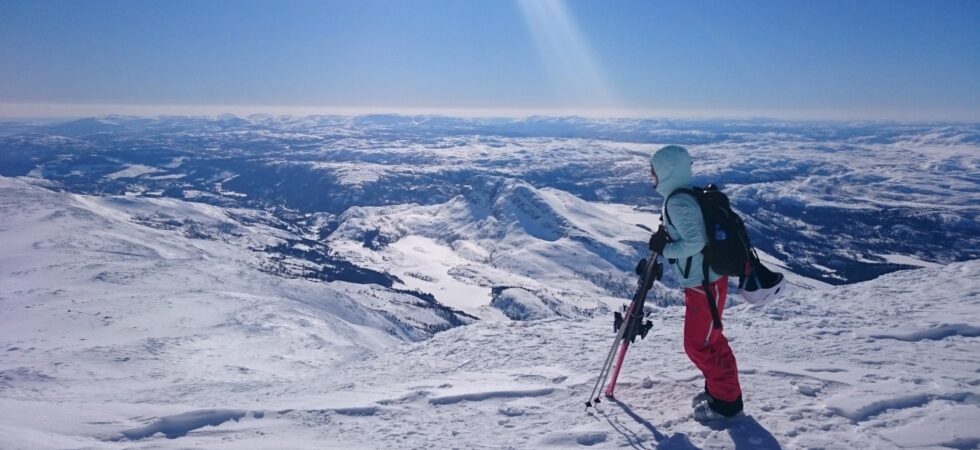
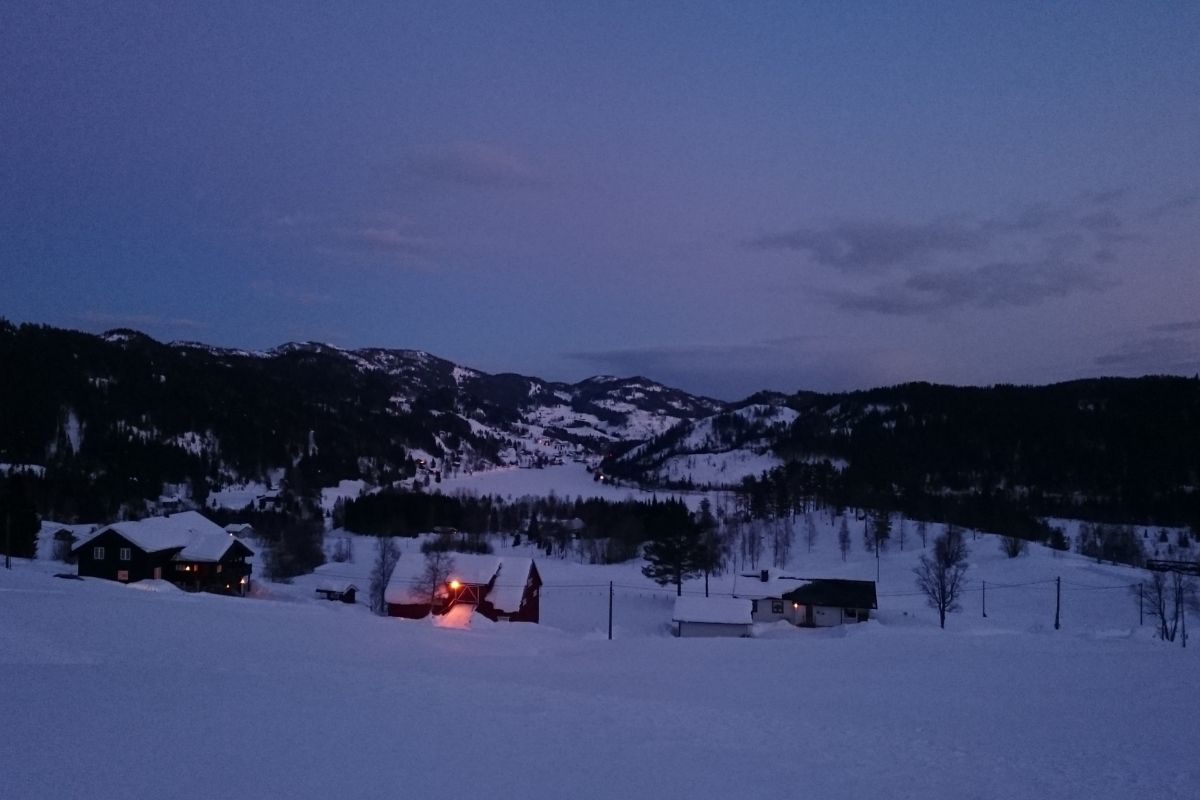
View of Sondre Norheim’s birthplace in Telemark. Photo: Susa Schreiner
Rjukan in Telemark: ice climbing at the foot of Gaustatoppen
Ice climbing enthusiasts appreciate the region for very different reasons: Rjukan. The small town lies in the heart of Telemark, right at the foot of Gaustatoppen, and is considered an ice climbing mecca that draws climbers from all over Europe. When temperatures drop, waterfalls freeze into vertical ice walls, often with the grace of cathedrals. The landscape then becomes an open-air stage for all those who love to experience winter with crampons and ice tools. And that’s exactly why we wanted to go to Telemark.
Why we went to Telemark – and how Plan B became Plan A
Our first attempt in 2020 failed due to the COVID lockdown. This year, the pandemic situation looked good – but an irritated tendon in the elbow crossed our plans. The doctor issued a clear ice-climbing ban. But: skiing and cross-country skiing were fine, according to him.
And suddenly Telemark revealed its greatest strength. I had been here before – and remembered how good this region felt to me. Because it doesn’t chase hotspot moments, but offers honest winter experiences. No spectacle, but gently rolling terrain. Countless lakes under thick layers of ice. Extra-long cross-country trails. And a sense of deceleration that effortlessly transfers to visitors.
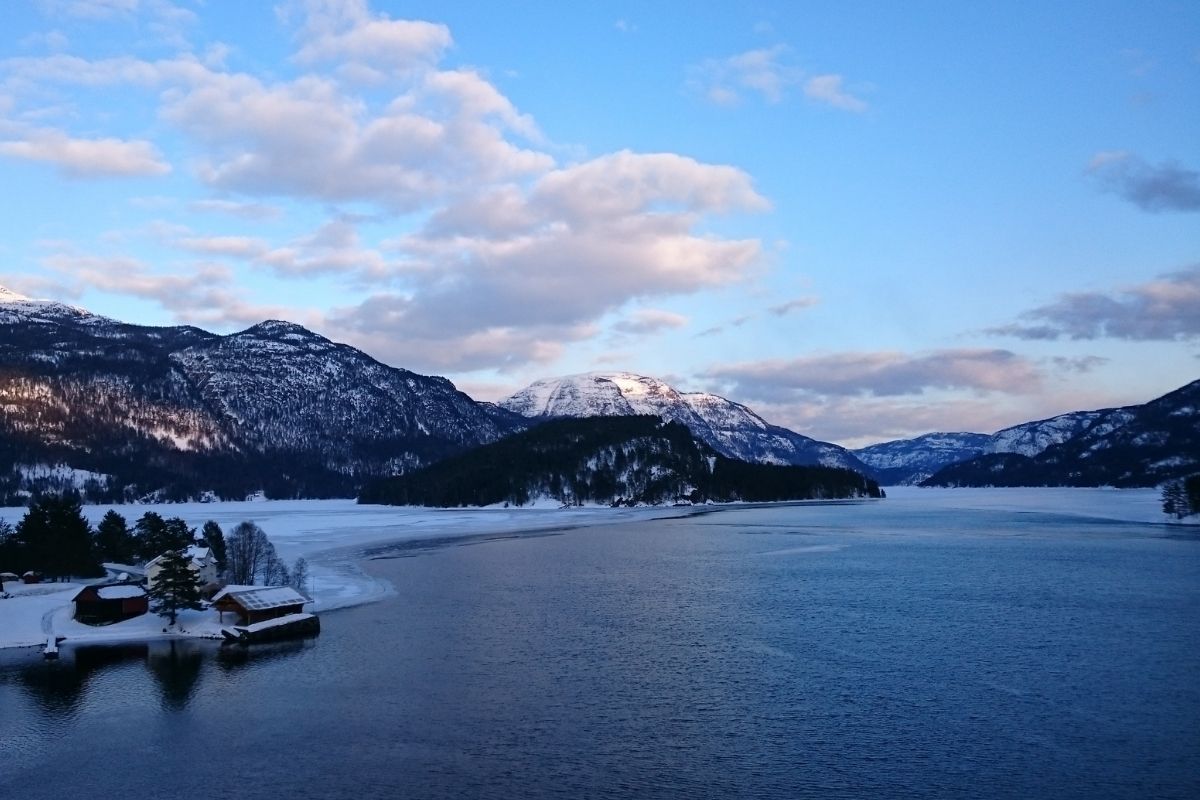
“No spectacle, but lots of hilly terrain and an awareness of slowing down,” is how our author describes Telemark. Photo: Susa Schreiner
So we changed course: away from ice, toward snow. Cross-country skiing, ski touring, small ski areas – and trails that stretch like endless lines through the landscape. Plan B quickly felt like Plan A.
GETTING TO TELEMARK: BY BUS AND FERRY TO SOUTHERN NORWAY
The variety of gear and the desire to explore many corners led us to choose bus and ferry travel. Admittedly, from southern Germany this takes longer. But in return, you can pack everything Telemark deserves – ski equipment, cross-country gear, touring add-ons – and enough warm clothing for real Nordic winter days.
Telemark is an oversized winter sports playground. And this playground doesn’t call for “quick in, quick out,” but for equipment and time. We treated ourselves to three weeks.
By ferry to Norway: Fjord Line or Color Line?
There are several ferry options for getting there:
Kiel – Oslo (Color Line): large ships, cruise-like feeling, travel time approx. 20 hours.
Hirtshals – Langesund (Fjord Line): compact crossing, travel time approx. 4.5 hours.
If you want to keep environmental impact in mind, book with Fjord Line: on this route, the company uses ships powered by LNG (liquefied natural gas) – pleasantly quiet, with no exhaust smell on deck.
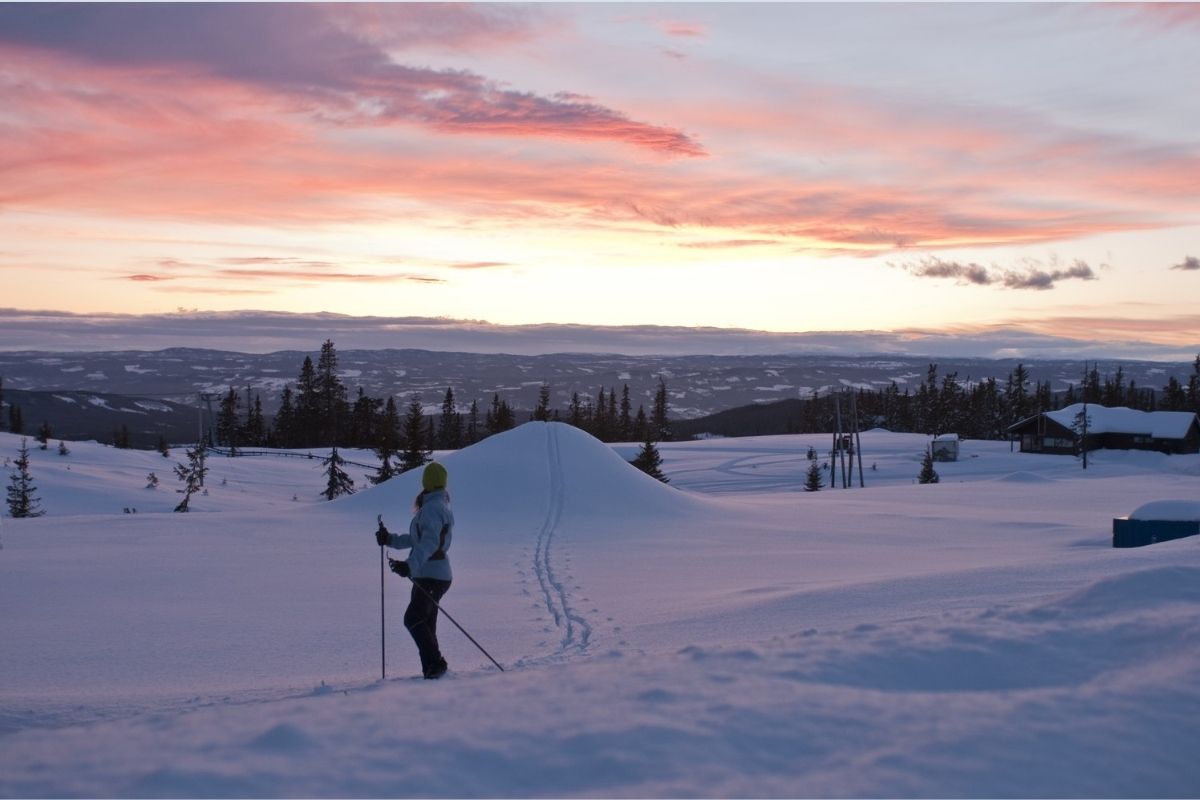
Author Susa on cross-country trails that stretch across the landscape like endless lines. Photo: Susa Schreiner
TELEMARK IN WINTER: WOOD, CANDLELIGHT, AND FIRE PITS
Even on the ship, we stick our heads into the wind and look at the houses: warm light glows in many windows. In many gardens stands a tripod grill. Two images that remain constant in Telemark: candlelight and fire pits.
Driving in Norway in winter: why roads are not salted
Driving in a Norwegian winter takes some getting used to – and is at the same time an expression of attitude: many roads are not salted or gritted out of consideration for wildlife. Reindeer and moose should not injure themselves when crossing or walking along roads. Snow chains are not a nice extra here, but just as essential as very good winter tires. And you take your time while driving. Traffic is sparse, but there is plenty to see: lakes under thick ice, animal tracks, Norwegians ice fishing. Some spend entire weekends out on the frozen lakes – with tent and thermos.
SKIING IN TELEMARK: DECELERATED INSTEAD OF CROWDED
While in many Alpine ski resorts people chase the “early bird,” in Telemark little happens before ten o’clock: it’s simply too cold, and in midwinter also too dark. In addition, transport here is still “honest” – with platter lifts or two- and four-seater chairlifts. Gondolas that whisk hundreds of skiers up the mountain in record time are unnecessary.
The result: winter feels quieter here. No hectic lift lines, no crowding, no constant noise. Telemark is ideal for families and leisure skiers – and for anyone who wants to feel again what skiing used to be like: uncomplicated, spacious, calm.
Gaustatoppen: freeride potential and the Gaustabahn experience
A very special skiing highlight is Gaustatoppen (1,883 m), the highest mountain in southern Norway. A freeride paradise that still seems to slumber in a kind of Sleeping Beauty state. The mountain looks like a broad, truncated volcanic crater, and the trained freeride eye immediately recognizes its potential: one face after another, from steep to moderate. A dream.
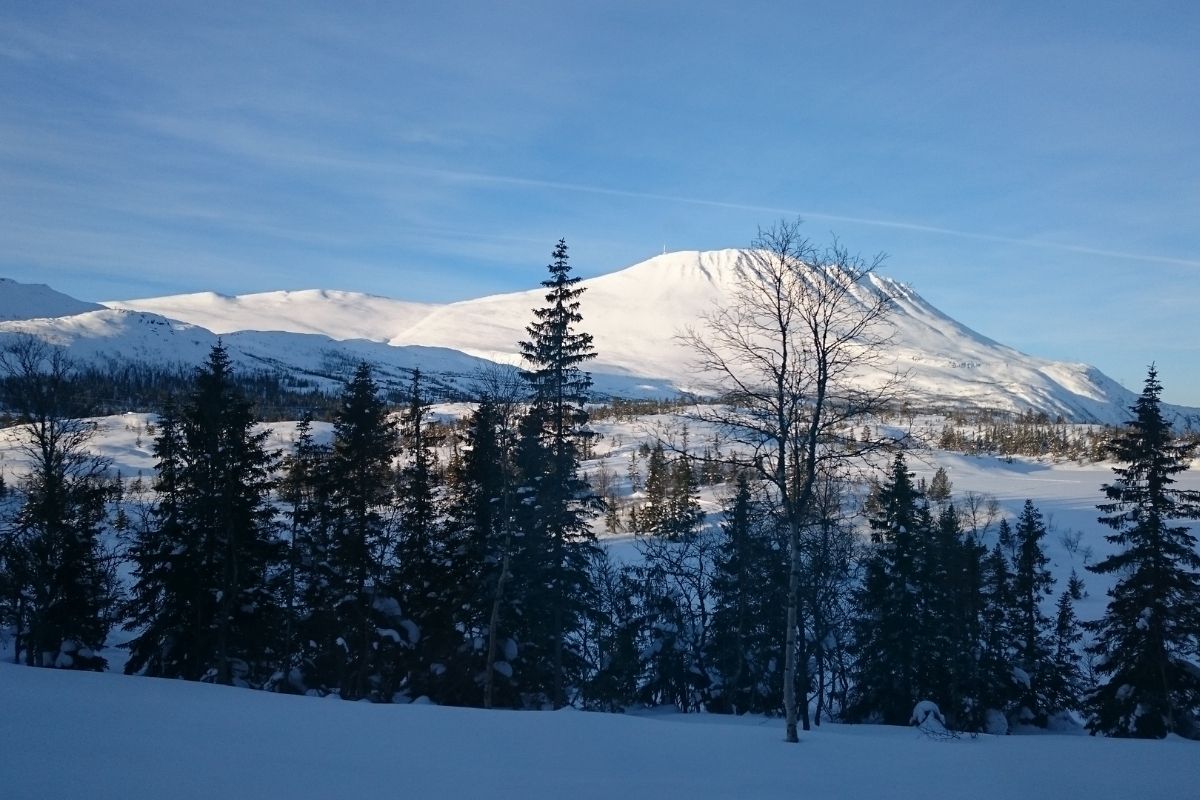
Gaustatoppen is southern Norway’s highest mountain and a freeride paradise. Photo: Susa Schreiner