
 Login
Login
 Stores
 Cart
Cart
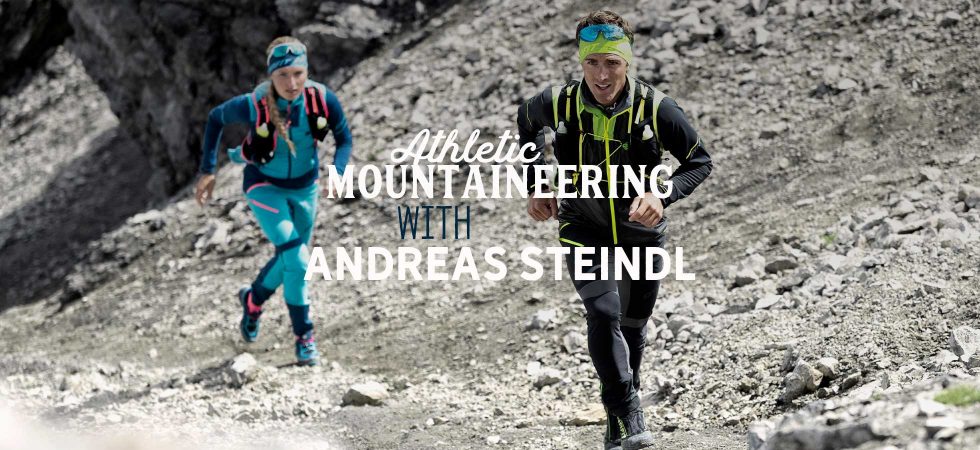
In the following interview, Dynafit athlete Andreas Streindl answered our questions on the subject of Athletic Mountaineering. Here you can find out what it is, what is important and which products you need for it. You will also find a selection of the Dynafit Elevation line at the end of this article. Dynafit has developed the Elevation line especially for ambitious mountaineers, with the aim of providing the best support on challenging tours. With the Dynafit Elevation line, you will find exactly the products you need to get around the mountains quickly and easily with maximum support.
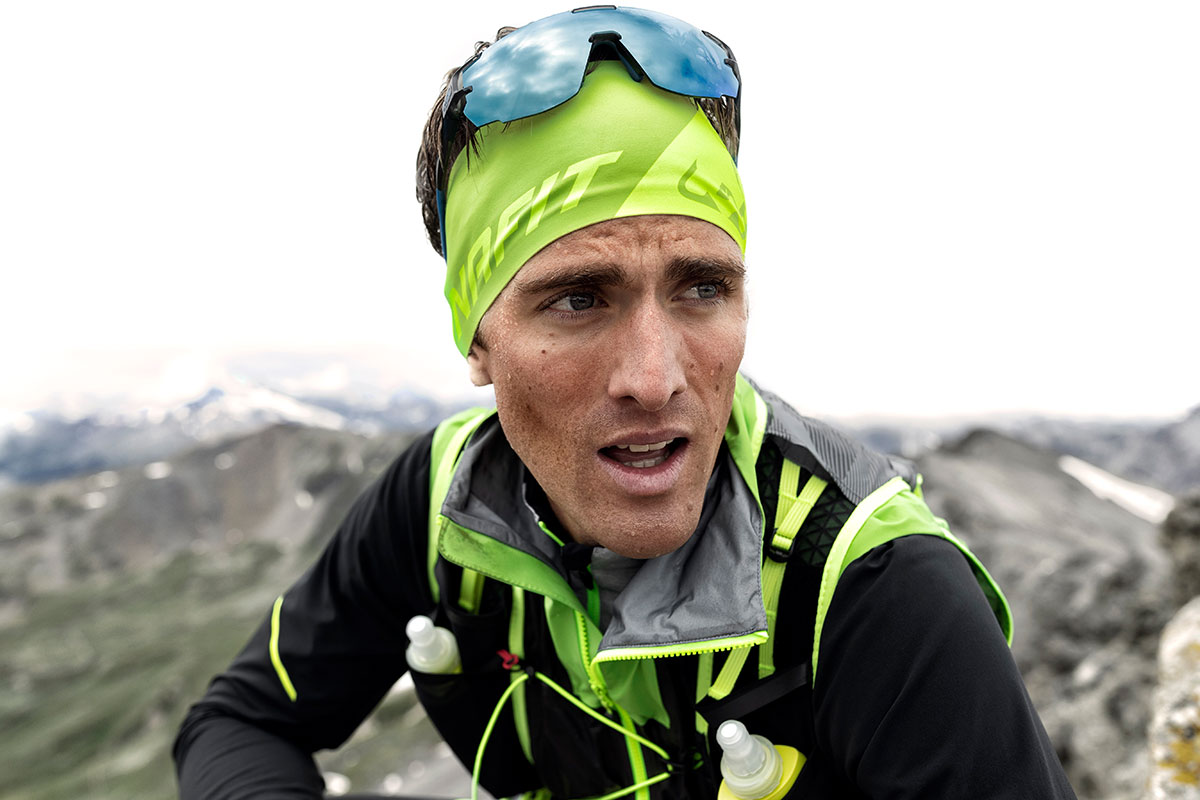
Swiss alpinist and ski mountaineer Andreas Steindl has been a member of the Dynafit family since 2019. The speed mountaineer reaches highly demanding peaks in record time. The 31-year-old not only covers distance and altitude, but also masters even difficult alpine terrain with playful ease. In July 2019, the Zermatt mountain on Mont Blanc caused a sensation. Together with the Italian Francois Cazzanelli, Steindl succeeded in climbing the highest mountain in the Alps via the Peutérey Intégral ridge in record time and returning to the valley. The two mountain guides needed only 15 hours and 55 minutes for the 4,300 hm and 45 km over the longest ridge of the Alps. One of the Swiss mountaineer’s greatest successes is also the record on the Matterhorn: in less than four hours (03:59:57), the extreme mountaineer ran the 2,861 hm difference and 22.8 km up the Matterhorn and back down from the church square in Zermatt on 27 August 2018.
Frage:
You are a successful alpinist, ski mountaineer and speed mountaineer. Why did you start with this kind of mountaineering?
Andy:
In my childhood and youth I was running all the time and always looked at the mountains from the valley. My young self wondered how fast you could run up there? So someone who can do it and feels comfortable in the alpine terrain. At that time it was unimaginable for me how I would move in the mountains today. When I started training as a mountain guide 10 years ago, and was out and about in the terrain practically every day, more and more ideas came up and in my head the thought regularly got stuck in my head of how fast I could be on my own without a guest. From 2011 on, these ideas became reality and I started to try my hand at personal projects that involve fast, dynamic movement in (high) alpine terrain. This is what Athletic Mountaineering stands for. An evolution of mountain running and mountaineering. The nice thing for me is to start in the valley and combine trail running with mountaineering. And I love being minimalist, easy and fast on the mountain.
Frage:
This type of mountaineering is often referred to as “Athletic Mountaineering”. What does this mean to you and what does it depend on?
Andy:
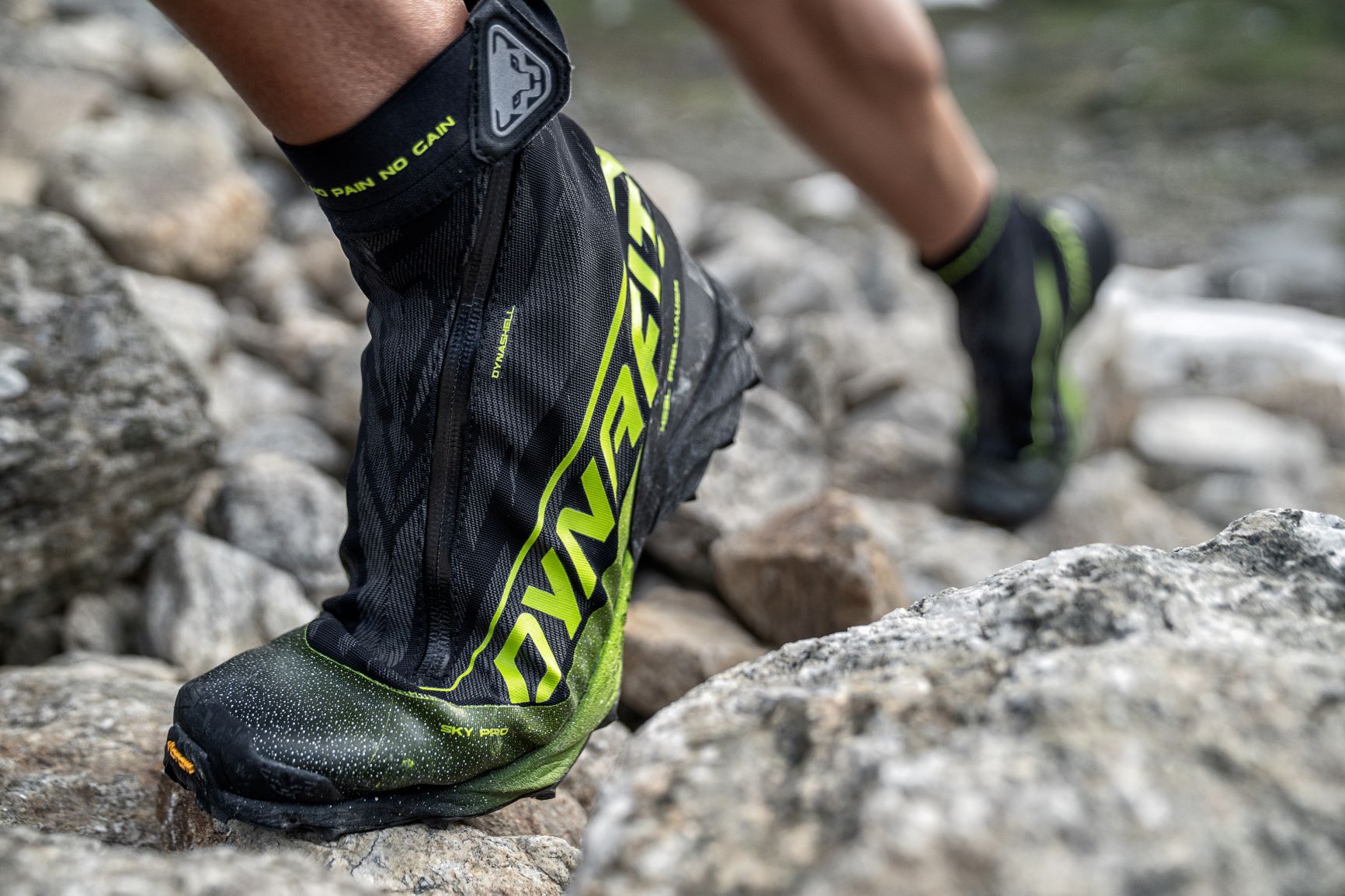
For me it is all about the fast and easy feeling of how to move in the mountains. With the minimum of material and in trail running or similar shoes like the Dynafit Sky Pro and not in heavy mountain boots. However, experience and skill play the biggest role. Especially in the age of social media and YouTube you see fascinating and inspiring videos again and again and many people think they can do it. Because they think it´s easy and playful. But often the viewer doesn’t see in the videos what’s behind: the training and preparation. Everyone has to take responsibility for themselves and be honest with themselves if they can really do it and want to take the risk. Probably in bad conditions or when the weather is changing easy mountains can be over the limit.
Frage:
From Zermatt, you climbed the Matterhorn in less than 4 hours, including ascent and descent! How do you prepare for such a project?
Andy:
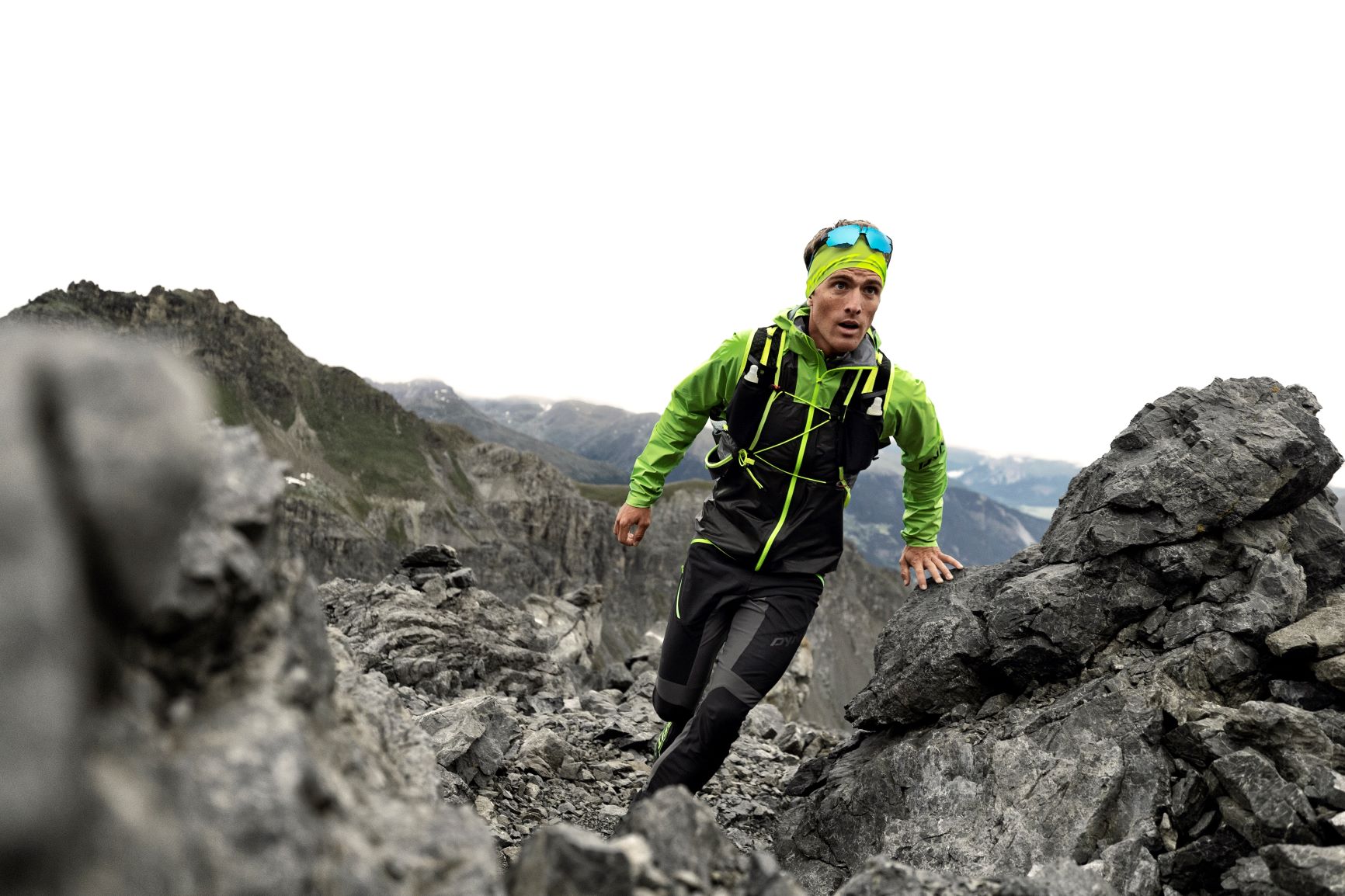
I had the project Zermatt Matterhorn and back in my head since 2011. In 2011 I went up on my own for the first time and needed almost 3 hours to reach the summit. But this was unprepared and simply meant as training. From that moment on I knew what would be possible with a specific preparation. From this the matter of the heart developed there to go to my maximum. Why it took me so long afterwards to realize my dream of running up and down under 4 hours was due to several reasons. I was not 100 % fit or injured, the conditions did not fit or other projects and races were on the agenda. So I had to practice patience for some years. That is why there is a great perfectionism behind it.
The conditions and the weather have to fit so that it is as safe as possible. In addition, it takes years of training in the classic mountaineering terrain to be able to move so light-footedly and safely. No matter if in summer or winter. Over the years a lot of hours and meters of altitude have been accumulated. Be it on touring skis, trail running and athletic mountaineering or on a bike. And last but not least you have to know the route, every stone, every root perfectly. Because on the descent everything goes so fast, I don’t have time to check if the stone holds or if I have to go left or right. In my head I have to be able to save the movements and the route and call them up automatically. Otherwise it can become dangerous very quickly.
Frage:
Which equipment should not be missing under any circumstances and supports you in being able to call up such performances?
Andy:
The most important thing in such projects is the shoe. You have to be able to trust it completely and also know where its limit is, especially if you are using crampons on a trail running shoe. But which equipment should not be missing is very individual after the tour and cannot be generalized. Under certain circumstances, one only needs something to drink and eat, maybe a thin jacket. But on another tour, crampons, ice axe, helmet, climbing belt, maybe a rope for a rappelling point… Thus, it depends on the tour and the conditions. But in case of doubt safety comes first. As mountaineers, you would rather carry the crampons and not use them than the other way around.
Frage:
What are the biggest challenges in Athletic Mountaineering for you?
Andy:
The biggest challenge is to be honest with yourself. Just because you did a tour or route last year, with a minimum of equipment, doesn’t mean you’ll bring the skill and head to do it again every year. It is also important to always show respect for the mountain and not to underestimate it. After all, the mountains stay and we can come back if we make the right decision.
Frage:
What are your next projects/What is your next project?
Andy:
I don’t like it to talk about new projects. Because in the mountains you never know whether the conditions will fit this summer or next year. And that puts additional pressure on you. At that moment it could affect the decision, so that you might take more risks than you normally would do. If nobody knows about the project, it has a positive effect on the decision-making process. Moreover, such projects are personal goals and dreams, which I prefer to enjoy for myself first and only share with others afterwards.
Frage:
Finally: What is your absolute favourite product?
Andy:
My favourite product is the Dynafit trail running shoe Feline Up Pro. It gives me the confidence and grip I need, and with it I can just run nice and easy. Also interesting is the Dynafit Sky Pro, which has the same construction as the Feline Up Pro, but also has an integrated gaiter and is also suitable for high alpine terrain or crossing snowfields.
Here you will find products from the Dynafit Elevation series, as well as matching shoes and accessories for men:
Here you will find products from the Dynafit Elevation series, as well as matching shoes and accessories for women:
Here you will find further interesting contributions to the topic: