
 Login
Login Stores
 Cart
Cart

Freeride ski clothing
What makes the ideal outfit?
Freeride clothing has to be extremely functional. Compared to ski touring apparel or pure alpine clothing, freeride clothing has to perform a balancing act: When freeriding, you often alternate between very active, sweaty phases and more inactive phases, such as riding the lift. That's why it's important to have ventilation zones with zips in the jacket and pants to help you on short climbs. The onion principle also offers more flexibility: Wearing several layers of clothing makes it easier to adapt to the weather. However, two thick layers, such as an insulated jacket and trousers with thick underwear, offer less flexibility.
However, you should also consider your personal needs and preferences when choosing freeride clothing. For people who feel cold easily, lined ski jackets and pants are an option, especially on cold days. Athletes who sweat easily will benefit from a combination of an unlined hard shell jacket and pants with a variety of mid layers. Snow skirts on the jacket and pants, and taped seams between the garments, keep snow out.



7 tips for building a freeride outfit
1. Use the layering principle: combine a moisture-wicking base layer + an insulating mid layer + a hard shell (lined or unlined as required) for optimum comfort.
2. Look for ventilation zips in the jacket and pants - this way you can regulate the heat on short climbs, for example.
3. Durable materials will ensure that you enjoy your gear for a long time.
4. Invest in good gloves and make sure your ski socks are not too thick, as a shoe that is too tight due to thick socks will restrict blood circulation unnecessarily. Fingers and feet are often very sensitive to cold when freeriding.
5. Take an insulated jacket with you for emergencies, even on warm days.
6. Pay attention to the position of your avalanche transceiver: It should be worn close to your body and at a sufficient distance from your mobile phone. Follow the 20-50 rule: the distance must be 20 cm in transmit mode and 50 cm in search mode.
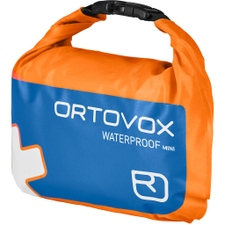
7. Never go into open terrain without safety equipment: avalanche transceiver, shovel and probe are mandatory. A first-aid kit, a bivouac sack and an avalanche airbagbackpack are also invaluable in an emergency.