
 Login
Login Stores
 Cart
Cart

What kind of rock climbing equipment do I need?
The basic equipment for rock climbing includes rope, climbing harness, belay device, quickdraws, carabiners and slings, climbing shoes, chalk and a helmet. But there are also a few things to consider when it comes to clothing. In this article you will learn everything about the basic equipment for rock climbers and typical climbing clothing.
Rock climbing packing list
Climbing equipment:
> Harness
> Belaying devices
> Climbing Rope
> Express slings
> Carabiner
> Webbing Slings
> Chalk bag & chalk
> First Aid Kit
> Water bottle & food
> Tape (optional)
> Brush (optional)
> Belay glasses (optional)
Climbing outfit:
> Climbing shoes
> Approach shoes
> Climbing helmet
> Climbing pants
> T-Shirt & Hoodie
> Outerwear


Climbing harness
The harness is the central safety element in climbing. It is strapped around the climber's waist above the hip bones and thighs and is used to secure the climber in the event of a fall. A harness is essential for all types of climbing where a rope is used. Bouldering is the only sport where you climb without a harness, but with a crash pad.
There are harnesses with and without adjustable leg loops. Adjustable leg loops have the advantage of allowing the harness to be worn over thicker layers, for example on a high alpine tour. It is important that the harness sits well around the waist or above the hip bones and cannot slip over the hips in the event of an overhead fall. Special women's harnesses are better suited to the female anatomy, but are not essential. It is important that the harness fits your individual anatomy well. For young climbers special children's harnesses are available.
Belay device
A belay device is also essential for rope climbing. A belay device is a mechanical device used in conjunction with a rope and harness to secure the climber. In the event of a fall or when the climber is being lowered, the belay device supports the belayer and slows the climber down. The belayer cannot stop the pull of the rope with the strength of their hands alone.
There are different types of belay devices, such as tuber, autotuber and semi-automatic. They differ in the way they operate and the degree of support they provide. Semi-automatic devices such as the GriGri2 and GriGri+ block the rope completely and require little hand force. Autotubers such as the Fish, Smart or Jul also block the rope completely as long as the brake hand is in the right position. Tubers offer the least safety for beginners, as they are unforgiving of carelessness and mistakes. Correct use of the brake hand is essential with tubers. Tubers are mainly used for alpine climbing and offer several advantages over semi-automatic belay devices.

Climbing Rope
The climbing rope is another essential piece of equipment. It is used to secure climbers and to cushion them in the event of a fall. In the climbing gym, a rope of 40 or 50 metres is usually sufficient; for rock climbing, a rope of at least 60 metres or more is recommended. Climbing ropes are available with a DWR that prevents dirt and water from penetrating the rope. This DWR is particularly useful for rock climbing and extends rope life.
For sport climbing in the climbing garden, a single dynamic rope is sufficient. Half or twin ropes are used for multiple pitches. It is also important to check what rope thickness the belay device is designed for.
Special rope bags are ideal for storing and transporting climbing ropes.
Express slings
Express slings, also known as quickdraws, are short slings consisting of two carabiners and a strap. They are used to connect the rope to the anchor points (pitons or bolts) on the rock. Quickdraws are needed whenever the rope is not already attached to the diverter.
Quickdraws are available in various lengths and weights, both individually and in sets. The number of quickdraws required depends on the length of the route and the distance between bolts. For most sport climbing routes, 10 to 15 quickdraws are sufficient.
Carabiner
Carabiners are metal rings with a spring lock that are used to connect different pieces of climbing equipment. For example, when belaying your climbing partner, you connect the rope to the belay device and the harness. Other uses include rappelling and abseiling. When using carabiners with a belay device, make sure that the carabiner fits the belay device. The manufacturers of the belay devices usually indicate which carabiner is recommended or sell the belay device and carabiner as a set.


Webbing sling
A webbing sling is a long loop of flat synthetic fibre fabric used to secure yourself and others. Band slings are used, for example, in the conversion of climbing gardens where there is no pre-installed diverter. They are also used for intermediate belay on hourglasses and other rock formations.
Chalk bag and chalk
A chalk bag is a small bag in which climbers store chalk (magnesium carbonate) to keep their hands dry and grippy. Chalk increases friction between hands and rock, but is not always necessary, especially on easy routes, and is even banned in some climbing areas. It is therefore worth reading the description of the climbing crag or area carefully before setting off.
Chalk comes in different forms: loose, as a ball in a net or in liquid form.
First aid kit
A first aid kit is essential in order to be able to administer first aid quickly and effectively in an emergency. The Rock Doc Chalkbag from Ortovox is specially designed for climbers and has an extra compartment with a small selection of first aid materials. Larger but still compact first aid kits contain everything you need in an emergency.
Tape
Sometimes you just leave too much skin on the rock and that's when climbing tape comes in handy. Tape is also useful for supporting individual joints. Climbing tape is easy to adjust and leaves no sticky residue on the skin.
Brush
A brush is used to remove dirt and dust from the rock to ensure a better grip.
Water bottle & food
As with many other strenuous sports, it is important to drink enough and stay hydrated. It is also important to eat well, especially on long days of rock climbing.
Belay glasses
Belay glasses are useful, especially if you tend to have a stiff neck when belaying and looking up. Glasses allow the belayer to look straight ahead and still have a clear view of the climber - provided the wall is straight and not riddled with drops and crossings. They are often seen indoors, but they can also be very useful when rock climbing.

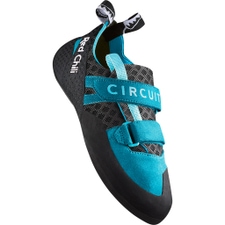

Climbing shoes
Climbing shoes are specially designed for this sport, offering good friction and sensitivity on the rock and in the gym. They fit snugly to ensure precision even with small footholds. Under no circumstances should they hurt permanently; they need to be broken in to adapt to the foot.
Climbing shoes need to fit well, especially in the heel and toe areas. To find the right fit for your anatomy, it's worth trying different brands and models. This is because manufacturers use different strips. To start with, straight not too stiff shoes will do as they are generally more comfortable.
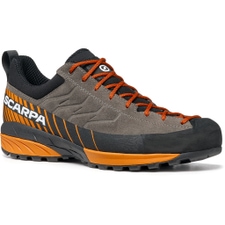
Approach shoes
Approach shoes are often useful on the way to the wall, as they provide good traction and stability, especially on uneven terrain. The base of the wall is often uneven and littered with stones and roots. Sometimes access to the climbing area is easy, in which case trainers are sufficient.
Climbing pants
Climbing pants should be comfortable and flexible to allow good freedom of movement. Ideally, they shouldn't be too loose, especially around the ankles, so that you don't get caught. Pockets are typically positioned for easy access, even when wearing a harness. Durable fabrics make the trousers fit for many adventures on the rock.

Outerwear
Climbing clothing should be made from breathable and quick-drying functional fabrics to keep the body dry and warm. Hoodies with ergonomically designed hoods that can be worn under a helmet when it's cold or drafty on the wall are practical.
Hardshell jackets are particularly useful in emergencies on days when the weather is uncertain. Also useful, especially in the high mountains or from autumn to spring: an insulating jacket. Insulated jackets for climbers have two-way zips so they can be worn comfortably with a harness.
Climbing helmet
Climbing helmets are always useful on the rock. Primarily, they protect both the climber and the belayer from falling rocks and debris. However, helmets can also be useful if you fall or hit your head on a rocky outcropping.
There are hard shell helmets, inmould helmets, and hybrid inmould and hard shell constructions. The most important thing is that the helmet fits well and is comfortable. Integrated adjustment mechanisms allow helmets to be quickly and easily adapted to individual needs. Special women's helmets have cut-outs for the ponytail so that the helmet fits perfectly.


