
 Login
Login Stores
 Cart
CartInsulation Jackets | Outdoor

- new
 OrtovoxVenet Swisswool 60 Insulation Jacket Blue Nunatak Men319,95 €Available Sizes:
- new
 ScottInsuloft Light Hoodie Insulation Jacket Portobello Beige Men179,95 €Available Sizes:
 - new
 ScottInsuloft Warm Insulation Jacket Latte Beige Women199,95 €Available Sizes:
 - new
 ScottInsuloft Tech Primaloft® Insulation Jacket Dusk Blue Men179,95 €Available Sizes:
- new
 ScottInsuloft Warm Insulation Jacket Fog Blue Men199,95 €Available Sizes:
 - new
 ScottInsuloft Warm Insulation Jacket Cocoa Red / Black Men199,95 €Available Sizes:
 - new
 ScottInsuloft Escape Liner Insulation Jacket Black Men169,95 €Available Sizes:
 - new
 ScottInsuloft Tech Primaloft® Insulation Jacket Wax Pink Women179,95 €Available Sizes:
- new
 ScottInsuloft Escape Liner Insulation Jacket Mist Blue / Black Women169,95 €Available Sizes:
 - new
 VaudeSesvenna IV Insulation Jacket Oat Men179,95 €Available Sizes:
 - new
 VaudeSesvenna IV Insulation Jacket Thyme Men179,95 €Available Sizes:
 - new
 VaudeSesvenna Pro III Insulation Jacket Dark Oak Women259,95 €Available Sizes:
- new
 MammutAenergy Air IN Hooded Insulation Jacket Strata Women319,95 €Available Sizes:
 - new
 MammutBroad Peak IN Hybrid Insulation Jacket Tschiel / Marine Men299,95 €Available Sizes:
 - new
 OrtovoxDownwool 180 Hooded Insulation Jacket Black Raven Men379,95 €Available Sizes:
 - new
 OrtovoxDownwool 180 Hooded Insulation Jacket Blue Nunatak Men379,95 €Available Sizes:
- new
 OrtovoxDownwool 180 Insulation Jacket Black Raven Men359,95 €Available Sizes:
 - new
 OrtovoxSwisswool Zinal Insulation Jacket Wild Cumin Men399,95 €Available Sizes:
 - new
 OrtovoxVenet Swisswool 60 Insulation Jacket Black Raven Women319,95 €Available Sizes:
 - new
 OrtovoxDownwool 180 Hooded Insulation Jacket Dark Linen Men379,95 €Available Sizes:
- new
 OrtovoxDownwool 180 Insulation Jacket Blue Nunatak Men359,95 €Available Sizes:
 - new
 OrtovoxVenet Swisswool 60 Insulation Jacket Grey Ice Men319,95 €Available Sizes:
 - new
 OrtovoxSwisswool Zinal Insulation Jacket Green Sage Women399,95 €Available Sizes:
 - new
 Peak PerformanceHelium Down Hybrid Insulation Jacket Summit Sky Men229,95 €Available Sizes:
- new
 VaudeCapacida Hybrid Insulation Jacket Woodland Kids114,95 €Available Sizes:
 - new
 PatagoniaNano Puff Hoodie Insulation Jacket Berry Fig Women229,95 €Available Sizes:
 - new
 OrtovoxVenet Swisswool 60 Insulation Jacket Dusk Rose Women319,95 €Available Sizes:
 - new
 MartiniYalca Flex In Hybrid Insulation Jacket Volcanic/daybreak Women309,90 €Available Sizes:


INSULATION JACKETS AT SPORT CONRAD
Insulation jackets primarily have one task: to keep you warm. They do this thanks to their material – insulation jackets are equipped with down filling or synthetic fiber insulation, or they are made of wool or fleece. They are usually worn as a top layer, but depending on the thickness, you can also use your jacket as a midlayer, under a hardshell jacket for example. Our tip: Since insulation jackets are often lightweight and have a small pack size, you should have them in your backpack on every mountain adventure. At Sport Conrad you will find a large selection of insulation jackets for every purpose and every taste. We have put together some information and tips so that you can find the jacket that suits you.

Before buying your jacket, you should know exactly what you will mainly use it for. The use of an insulated jacket is diverse and depending on your preferences, it must have certain properties. Fact is: Whether ski touring, mountaineering, mountain biking, climbing or mountain hiking - in the Alps, or in the mountains in general, you should always have an insulation jacket with you. Even if you may not need it, it is always a good companion as a backup and emergency equipment.
Protection against the cold is the most important feature
The thermal performance of an insulated jacket should always be considered first. After all, protection from the cold is the core task of any insulation jacket.
It is important, for example, that you can adjust the hem of the jacket so that no cold can creep in from below. Also adjustable cuffs or elastic arm cuffs ensure that cold and drafts can not enter.
If you plan to wear a rather thinner insulation jacket as a midlayer, you don't necessarily need a hood. However, if it is to protect you from the cold as a top layer, a hood is important - depending on the type of sport, you should then make sure that it fits over or under your helmet.
It is also pleasant if the collar is cut high and has a soft fabric or fleece insert on the inside, which makes the jacket even more cozy.
A two-way zipper can also be very practical. For example, if you wear a climbing harness under the jacket, you can open the jacket only a bit from the bottom and do not have to open the zipper completely.
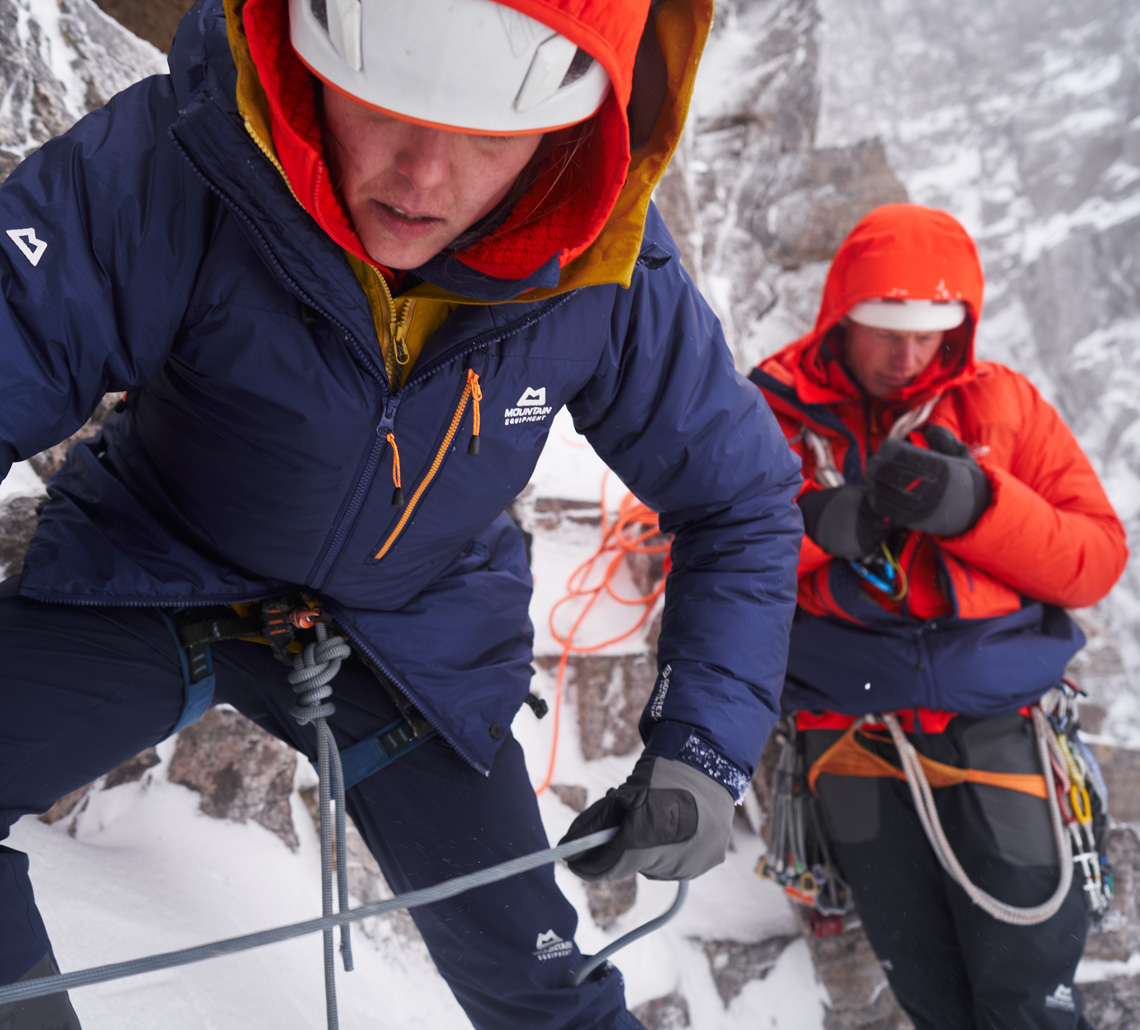
Most important: protection against cold!
Breathability
One thing is logical: the denser, warmer and more protective, the less breathable. Insulated jackets with synthetic fiber filling still perform best, as they achieve better thermal performance in humid conditions than down jackets, for example.
Water repellent vs. waterproof
If you take the jacket for ski touring, it should at least be water-repellent. For mountaineering over several days and uncertain weather, your jacket should perhaps even be waterproof or you have a hardshell jacket to put over it. For climbing, on the other hand, a waterproof jacket is not as important. As a rule, iso jackets are not waterproof. Some jackets are equipped with a DWR impregnation (Durable Water Repellent), then they can withstand short rain or snow showers.
Good freedom of movement
The jacket should not hinder your movement. Insulation jackets are usually not very stretchy, so it is even more important that the cut adapts well to your body and that it is neither constricting nor so wide that you could get caught somewhere with it.
Light weight and small pack size
Insulation jackets with down or synthetic fiber filling are naturally quite light. That's handy when every gram counts on your tours.
The right equipment for your needs
If you're a climber and often wear your jacket with a harness, it's important that the pockets are positioned in such a way that you can easily reach them. The same goes for hikers with backpacks: You probably don't want to open the straps of your backpack every time to get to your smartphone in the pocket.
Insulation jackets can be made of various insulating materials. These materials form air pockets that effectively keep the heat on the body. The best known are down jackets, which are jackets filled with duck or goose down and feathers. But there are also jackets that have a synthetic fiber filling, in addition, wool and fleece jackets that protect against the cold. We will show you the advantages and disadvantages of the different models below.
Down jackets
Down jackets bring three advantages: They are very light, can be packed very small and have a very good thermal performance - they keep you warm even in the iciest winter. In addition, they are durable and can be with you for years. But then they also have their price. Duck or goose down is used as a filling material, sometimes mixed with feathers.
However, the use of animal materials also brings a disadvantage: not all manufacturers of down jackets pay attention to animal welfare. If this is important to you, you should definitely take a closer look. Among others, there are the seals "RDS", Responsible Down Standard, or the Down Codex from Mountain Equipment, which label ethical down. Some manufacturers also use recycled down for new jackets, which is certainly also a good option.
Another drawback is the issue of moisture. If the down jacket gets wet, the insulating performance of your jacket can greatly diminish. So if you expect to be outside with your down more often in wet conditions, then it should definitely be water-repellent.
Synthetic fiber jackets
Insulation jackets with synthetic fiber fillings are a good alternative to down jackets. They completely dispense with animal materials. The extremely thin fibers make for particularly soft and warming insulation material. Brands such as Primaloft or Coreloft are constantly developing their products and can almost match down jackets in terms of thermal performance - although not quite yet.
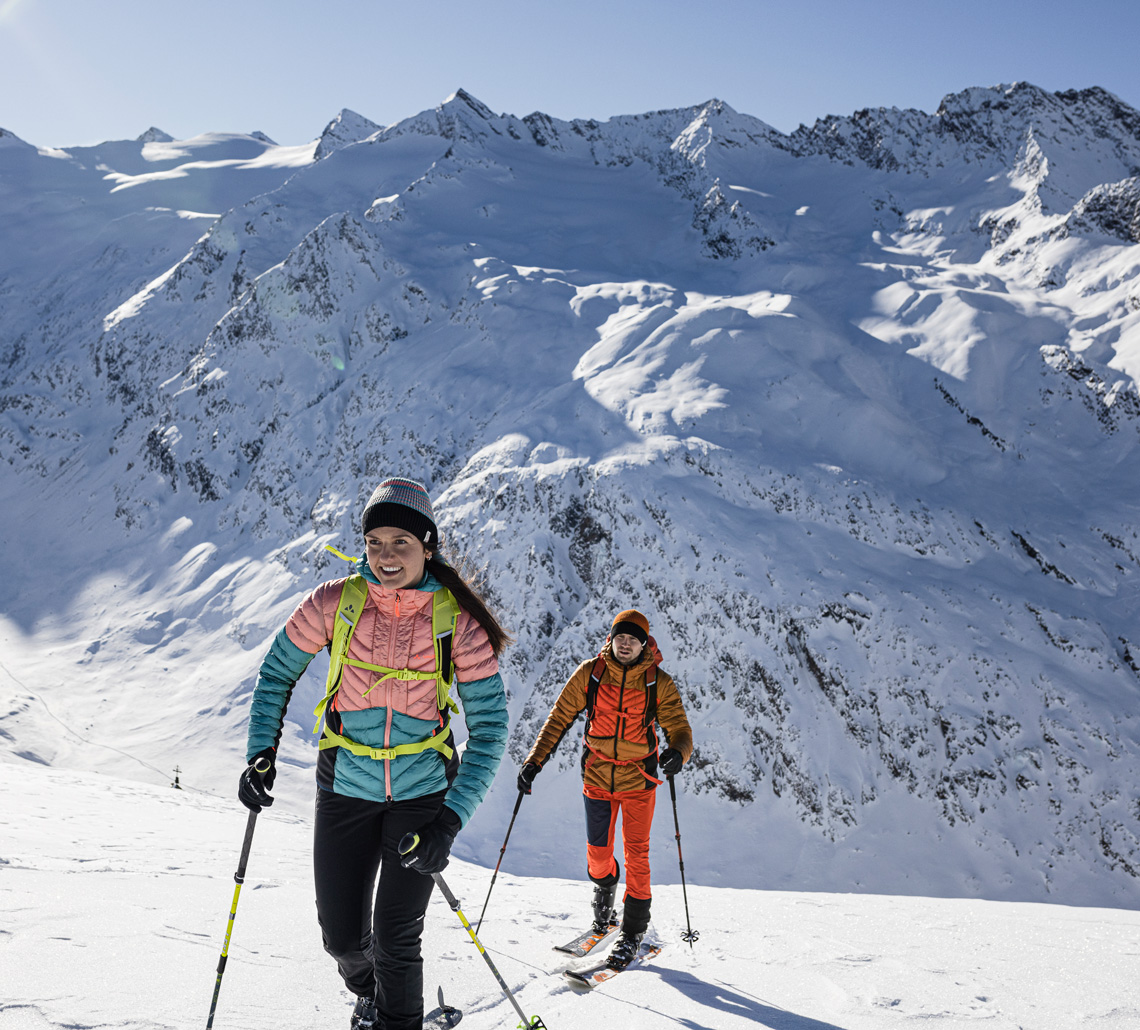
The advantages of insulated jackets with synthetic fiber filling are, on the one hand, the lower price and, above all, the fact that they reliably warm the body even when damp. On the other hand, they are usually somewhat heavier than down jackets and not quite as compressible.
Insulation jackets with wool
Wool is a natural insulation material that is increasingly used instead of down or synthetic fiber. Since animal materials are also used here, you should, as with down, make sure that the wool is fairly obtained. For this there is, among other things, the label RWS (Responsible Wool Standard). Here it is ensured that the sheep are kept in a species-appropriate manner, get good feed and that mulesing is avoided.
A big advantage of wool is that the material is relatively insensitive to moisture and can still keep you warm when wet. Wool jackets are usually lightweight and also have a small pack size. Wool is self-cleaning and robust and also odorless and temperature regulating. However, the thermal performance of down and synthetic fiber jackets is higher.
Fleece jackets
Is a fleece jacket also an insulating jacket? Yes-no. It can certainly be insulating, but not nearly as well as down, synthetic fiber or wool. Fleece jackets with high material thickness always keep warmer than thin micro-fleece. Fleece jackets are often cheaper and comfortable to wear. However, they are not weatherproof and therefore more suitable as a midlayer.
WASHING AND CARE INSTRUCTIONS FOR INSULATION JACKETS
In order to enjoy your outdoor clothing for as long as possible, you should always follow the manufacturer's washing and care instructions. Then nothing can go wrong.
For down jackets, it is often enough to remove stubborn stains with gall soap and air them out well. If you still want to wash it: close all zippers, empty the pockets and turn the jacket inside out. Use a special down detergent. Wash the jacket alone in the washing drum and not at more than 30 degrees, preferably in the delicate or wool program and with minimal spinning. After the main wash, follow with a rinse cycle and then carefully remove the down jacket from the machine!
To dry the down jacket, it is best to put it in the dryer (not too hot!). Tip: Add two to three tennis balls, this will shake up the jacket during drying and the down will be puffed up. If you don't have a dryer, you have to shake the down jacket regularly by hand.
You don't have to wash synthetic fiber jackets all the time, once a season is enough. In principle, all the same instructions apply as for down. The only difference is that you can put other garments in the drum, and you should not use a spin dryer at all. For drying, the same applies as for down jackets.
For insulated jackets with wool, you should use a wool detergent. Do not spin dry and hang dry the jacket (but not in direct sunlight) – never put it in the dryer!
Fleece jackets can usually be washed normally and hung to dry. To prevent microplastics from getting into the water, there are now special wash bags for fleece products.
BUY INSULATION JACKETS AT SPORT CONRAD
Sport Conrad offers a variety of insulation jackets for every purpose. They come in all shapes, sizes and styles and of course for men, women and children. Top brands for down jackets are for example Mountain Equipment, Patagonia, Salewa or Peak Performance. Synthetic fiber jackets are available from Norrona, Vaude or Dynafit, among others. Ortovox often uses Swisswool for its insulation jackets. Fleece jackets are also available from all well-known top outdoor brands in our online store.